Bonner F. Fellers Quotes
As I told [Admiral] Yonai … it is extremely disadvantageous to MacArthur’s standing in the United States to put on trial the very Emperor who is cooperating with him and facilitating the smooth administration of the occupation. This is the reason for my request … I wonder whether what I said to Admiral Yonai the other day {601309} has already been conveyed to Tojo?
Bonner F. Fellers, Army General, Head of Psychological Warfare, (Senior officer responsible for investigating Japanese WWII war criminals), Meeting with Shuichi Mizota, March 22, 1946
Sourced by: Eigen's Political and Historical Quotations

Allied calls for indictment of Emperor Hirohito. war crimes trials of Tojo and other Japanese leaders Senior officer responsible for investigating Japanese WWII war criminals. Fellers was the officer who had previously done the “research and investigation for his boss General Douglas MacArthur who had recommended no prosecution for the Emperor. See {605727}. Yonai was to get word to General Tojo and Admiral Shimada, already indicted as war criminals to minimize the role of the Emperor who had personally approved of Pearl Harbor and every major subsequent act of Japanese aggression. Shimada was “on board” but there were doubts about whether Tojo would go along with the deceptive exoneration of the Emperor.

It was never submitted as evidence in any proceeding or made a part of the U. S. investigatory record of war crimes of World War II. Nor was it ever found in Japan in the official records. The only copy was found in 2003 at the home of Bonner F. Fellers one of MacArthur’s top aids in the Japanese Occupation. Fellers and McArthur advocated not further investigating or trying the Japanese Emperor either because they, believed he was not guilty or because they thought his trial would be too disruptive to the occupation. The authenticity of this monologue has not been verified. Apologists for the Emperor argue that it shows that he was a virtual prisoner of the militarists and unable to stop the war or any of the war crimes; others argue that the Japanese military would never have gone against the will of the Emperor and that this document was probably prepared with the coaching of General Fellers as ex post facto “evidence” of the Emperor’s innocence. See {643148} and {601309} for examples of Fellers manipulating the “evidence.”


The second atomic bomb had just been dropped.

Eichmann had been responsible for the logistics of murdering most of the over 6 million civilians in WWII. With the aid of pro Nazis in South America he had been hiding there from the allies and justice. Israeli agents located him, kidnapped him, and transported him to Israel where he was tried and hung for crimes against humanity.

Other war criminals had committed suicide in conformity with the Japanese custom. But Tojo stayed alive so that he could take the responsibility from the Emperor Herohito who many Americans wanted tried for his actions and inactions during the war. But Tojo made an error. At the beginning of his trial he testified that he always obeyed the Emperor even though he was the Prime Minister and the head of government. Therefore, the Emperor was guilty of those crimes he had discussed with Tojo and the cabinet. Later, he was persuaded to change his testimony and said that he led the country to war and the Emperor wanted peace, a statement that few believed. See {587278}. While the Emperor had committed war crimes General MacArthur believed that the Emperor left in place and unpunished would make it easier to govern Japan, than if he were tried and punished. However, he and his staff fabricated a report to exonerate the Emperor rather than make his recommendation to his superiors and the President so they could either accept his view or not. He was a unilateralist in the administrative sense of the word. See {587279} for additional material on the Emperor’s guilt.

Emperor Hirohito was never indicted at the behest of General MacArthur’s recommendations {605727}. Yet Bernard felt compelled to address the missing defendant’s guilt as did the English Judge {43999}


The soldiers obeyed their orders and killed every man, woman and child they could find outside the city. They beheaded captured prisoners, bayoneted pregnant women and children. All civilian houses were burned, often with the people trapped inside.

none of a prosecutorial nature At the end of World War II, a major issue was whether to try the Japanese Emperor as a War Criminal. He had been the Commander and Chief of the Japanese Armed Forces, personally appointed virtually every military of civilian official of consequence—who served at his pleasure, had personally approved every major Japanese invasion (except some of the China incursions) and attack (including Pearl Harbor), personally allowed the execution of American captured prisoner of war flyers from the Doolittle raid on Tokyo, and was knowledgeable about most of the Japanese war crimes. However, General MacArthur thought him a stabilizing force in post-war Japan and never did a detailed investigation of his possible indictment. Instead he wrote this magnificently artfully worded telegram to General Eisenhower. MacArthur wanted to shock the Truman administration into allowing him to reduce the Emperor’s dictatorial powers but retain not only the monarchy but avoid indicting Hirohito. He succeeded, and there was no serious investigation of the Emperor as a possible war criminal despite many calls for Hirohito’s indictment from a few allied politicians {43748} and some American and allied veterans groups. Few could argue with the pragmatic result and the rehabilitation of Japan, but the justice of the decision—or lack thereof—has been debated since. See {43823}, {43824}, {603499}, {43831}, {603752}, {43841}, {601309}, {593777}, {43997}, {43999}, {594634}


This statement caused great consternation. NcNutt did try to explain that he was speaking personally and not for the Government, but there was a small proportion of America who had concluded that all Japanese should be killed. Such an concept which was unthinkable 5 years earlier was considered as a result of several factors: The Japanese had murdered many American prisoners of war. Killed millions of civilians throughout Asia including doing medical and weapons experiments on live human beings. They had practiced torture, compulsory prostitution and mass rape of conquered territories. At the same time, the Germans had tried to exterminate all the Jews and, with some Japanese help, did kill two-thirds. The concept of genocide had been introduced to Americans as the concentration camps were liberated. And American casualties in the Pacific had been heavy. Vengeance was desired by many. Fortunately, the overwhelming majority of Americans never considered genocide seriously.

On March 9-10, 1945, over three hundred B-29 Superfortresses, loaded with 2,000 tons of incendiary bombs flew over Tokyo bombing the city in waves for 6 hours. Over 250,000 buildings were destroyed and more people killed than would be in either Hiroshima or Nagasaki which were destroyed by atomic bombs. The fact that the Japanese would not surrender even after such complete destruction of their capital and largest industrial city, was used by American leaders in assessing whether to use the atomic bomb afterwards. There were many who believed that the atomic bomb would not be enough for motivate a Japanese surrender as Japanese culture prohibited surrender. Indeed, even after the 1st atomoc bomb, the Japanese did not surrender, and after the 2nd, the war council was split 3-3 and the Emperor historically broke the tie. Even the atomic bomb might not have worked. Later generations found this resistance to surrender hard to understand but Japanese culture was amazingly strong then.

This has been true in just about every conflict. In WWII however, there were a highly disproportionate ration of atrocities with those of the axis forces dwarfing those of the U. S. and its allies. Further, after the war, those allied atrocities that did take place were published. In addition, one basic difference is in the policies of the fighting forces and their governments as opposed to individual actions by soldiers. In WWII, the allied atrocities were of the latter type, but the axis atrocities involved both.

Sharon, before he became Prime Minister was an Army General, who led the attack on the Palestinian PLO terrorists in Southern Lebanon. He had made an alliance with the Lebanese Christian Phalangists who had been brutalized and many had been murdered by the PLO militants who operated out of the Sabra Sabra and Shatila Beirut refugee camps where the terrorists had a safe haven and their headquarters in Shatila. Israeli troops under Sharon had reached Beirut, and then the Phalangists attacked the two refugee camps where they had scores to settle and sought revenge. Somewhere between 700 and 3500 Palestinians were killed. Most of them were civilians (according to the Palestinians) or terrorist fighters (according to the Phalangists). Sharon was faulted by many for the deaths; these critics observe that Sharon, as the victorious military power in the area was responsible according to the rules of war for the safety of all civilians in the area. He commanded the strongest military in the area and he allowed or did not stop the Phalangists who were exacting their revenge. Therefore some accused him of war crimes. There was also an Italian military peacekeeping contingent in the camps but they chose not to intervene.

The Colonel defined people capable of bearing arms as males and females over 20 years of age. Many were slaughtered. Fortunately, most of his officers and men did not follow this order but enough did to make it one of the most disgraceful events in American military history. Smith was court marshaled and found guilty but his punishment was to be cashiered from the army. There were many atrocities committed by the minorities of both sides in this brutal war. Military and Congressional Investigations caused the army manual to be revised military policies reformed.


During WWII, the Japanese militarists maintained what they euphemistically described as “brothels” of “comfort women.” They Japanese forced 200,000 Korean Women to become sex slaves for the Japanese Troops in addition to Dutch and other white civilians interned by the Japanese in Asia. For years after the war, the Japanese Governments denied this or maintained a discrete silence. Finally some of the Korean women demanded an apology and restitution and it became a world-wide scandal. Unlike Germany which went through a public nationwide assessment of their WWII atrocities, Japan’s apologies for their war crimes have always been very muted and discrete and Japanese students are not even taught about the Japanese atrocities. Worse, nationalist Japanese politicians have either denied the facts about the sex slavery or as in this quotation, attempted to justify the horrid behavior. See {632770} for an American approach to the same problem.


There were actually very few incidents of civilian resistance to the German invaders and occupiers. However, they were exaggerated and used as a pretext for what amounted to atrocities and war crimes against the Belgian Civilians.


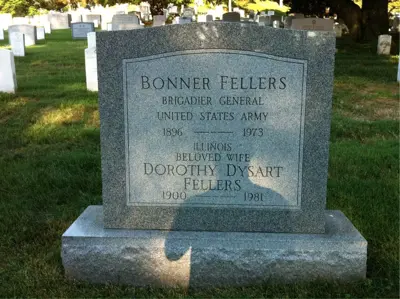
- Born: February 7, 1896
- Died: October 7, 1973
- Nationality:
- Profession:
Bonner Frank Fellers was a US Army officer who served during World War II as military attaché and director of psychological warfare. He is notable as the military attaché in Egypt whose extensive transmissions of detailed British tactical information were intercepted by Axis agents and passed to German Field Marshal Erwin Rommel for over six months, which contributed to disastrous British defeats at Gazala and Tobruk in June 1942. He was considered a protégé of General Douglas MacArthur.
