AKBAR HASHEMI RAFSANJANI
The concept of Mutually Assured Destruction (MAD) has inhibited the use of atomic weapons since WWII. If one nuclear nation attacked another, the attacked nation would still have time to retaliate and both countries would be destroyed. However, Iran by their own statements and past history might not be inhibited by large losses and death in retaliation. Iran, a theocracy, has a religion that believes that any Muslim who is killed in defense of Islam will immediately go to heaven. They have sacrificed hundreds of thousands of their citizens in their war with Iraq. Iran is a much larger country than Israel where a single nuclear bomb would destroy the whole nation. One retaliatory bomb would do terrible damage to Iran but much more of the country and its people would survive. The Iran fanatics might make such a tradeoff as a religious obligation. This is why, most of the world is doing much to prevent Iran from getting a nuclear weapon at all. Rafsanjani’s logic however assumes that if Iran fired one bomb, Israel would retaliate with one bomb. However, Israel has the capability of carpeting all of Iran with a nuclear muti-warhead retaliation so Iran would also be completely destroyed. However Israeli policy has been to never discuss anything about nuclear weapons and their policies. Some ultra-fanatical Muslims have argued that even of all of Iran and its people were destroyed, this would be a worthwhile “martyrdom” so that the remainder of the Muslim world would be free of Israel. This is illustrative of how difficult it is negotiating with religious fundamentalists who control a nation.
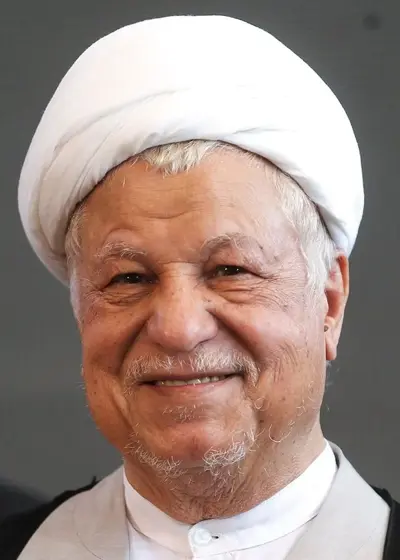
Akbar Hashemi Rafsanjani was an Iranian politician, writer and one of the founding fathers of the Islamic Republic who was the fourth President of Iran from 3 August 1989 until 3 August 1997. He was the head of the Assembly of Experts from 2007 until 2011, when he decided not to nominate himself for the post. He was also the chairman of the Expediency Discernment Council.
