Akbar Hashemi Rafsanjani Quotes
And I gave this directive to them, that if they free our assets in the United States, that would be a sign of goodwill. I have the same idea this time.
Slavin, Barbara. "Excerpts from USA TODAY's Interview with Iranian Cleric Akbar Hashemi Rafsanjani." USA Today, Gannett Co., 31 May 2005.

Discussing the possibility of renewing relations with Jordan after it had supported Iraq in the Gulf War, the ambassador wanted an admission of wrongdoing from Jordan.


Kennan was talking about the Russians, but the same principle seems to hold with any autocratic government and in some cases even democracies. However, the tradition of secret diplomacy with no transparency is established even in many democracies. Great Britain and France, for example conduct most of their diplomacy in secret as do less democratic governments and tyrannies. They expect us to keep negotiations confidential, which causes American diplomats to be torn between the American view of transparency and the tradition of confidentiality.
There is one condition for us to have healthy relations with the United States. It's called respect.
This is an old and critical concept in American relations with the rest of the hemisphere which Simon Bolivar used to refer to as “respecto.” Americans tend to be relatively unconcerned by what other nations think of America, and since the US has been so successful, it has developed a strong national ego. Other nations, not so successful in modern times, tend to place a great deal of importance on the notion of respect. It is a major factor in most of the world.
The Conclusion of the Russo-Japanese War. The treaty was negotiated and signed in Portsmouth New Hampshire. President Theodore Roosevelt was awarded the Nobel Peace Prize for his mediating efforts. The language was typical of a peace treaty where just before its signature the two nations and their emperors were vilifying and dehumanizing the other.


With promises the success lies in following through and keeping the promise which is usually very costly. A threat that fails meanwhile can be the most expensive thing. We make a threat to deter a foreign power from something. Failure occurs when they are not intimidated and go ahead anyway. Then if we follow through on the threat, that is very costly—a war, a trade embargo, or whatever. Not following through on the threat is the costliest of all as we lose our credibility, trust and honor.


This was part of the negotiation of a peace treaty with the Barbary States. The Barbary Pirates had an incredible extortion racket going in the Mediterranean. If nations would pay them an annual sum each year, they would not attack and seize merchant ships of that country and sell the ships and goods while holding the sailors for ransom. Military action on land and sea by American marines and naval ships had caused much damage and intimidated the Barbary States somewhat. See {640870}

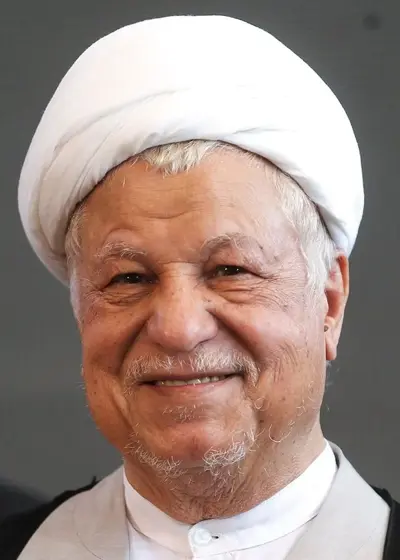
Akbar Hashemi Rafsanjani was an Iranian politician, writer and one of the founding fathers of the Islamic Republic who was the fourth President of Iran from 3 August 1989 until 3 August 1997. He was the head of the Assembly of Experts from 2007 until 2011, when he decided not to nominate himself for the post. He was also the chairman of the Expediency Discernment Council.
