Hirohito Quotes
The war situation has developed not necessarily to Japan's advantage.
Hirohito, 1901-1990, Japanese Emperor, Japanese surrender announcement, August 15, 1945
Sourced by: Eigen's Political and Historical Quotations


After the Hiroshima bomb there was still no surrender by the Japanese. The decision was made to drop the second bomb on Nagasaki.


In the earliest prediction of the World War II conflict between America and Japan:

1st Earl Lloyd-George of Dwyfor

Haig was one of those who thought that President George W. Bush should have continued the war and occupied the country and the cities to eliminate Saddam. His own son, George W. Bush, later invaded Iraq and did occupy the country and eliminate Saddam, but the cost was so high that few Americans thought it was worth the cost in American casualties and money. The younger Bush proved how wise his father and Colin Powell had been. See {622764}.

Each day the German Airforce was sending air assaults over England. The English defenders were shooting down 2 Germans for every English plane lost. The British however were running out of pilots. Both sides were terribly weakened. However it was the Germans who cracked and called off the air assault prelude to the planned invasion of England.

The Falkland Islands were very close to Argentina and far from England. The Argentineans had offered the few Islanders large sums of money to become part of Argentina, but this was rejected. Argentina was a military dictatorship with a terrible record of human rights abuses. The Falklanders preferred their traditional British style of government and affiliation. The Argentinean generals assumed that if they invaded, once they controlled the Falkland Islands, they could negotiate with the British over issues of sovereignty. They misinterpreted the American UN Delegate and concluded that America would not support Britain in a military response; they also assumed that while the British would complain in the UN, they would never go halfway around the world to invade the islands, now occupied and reinforced by Argentina. Thatcher would not negotiate unless the invaders left the islands. They did not do so voluntarily. The Argentinian military had been abusing their own citizens for so long that they had an inflated concept of their fighting ability. Britain freed the islands militarily, and Argentina was humiliated. The military government fell bringing democracy to Argentina—the only good that came out of the Faulklands War.


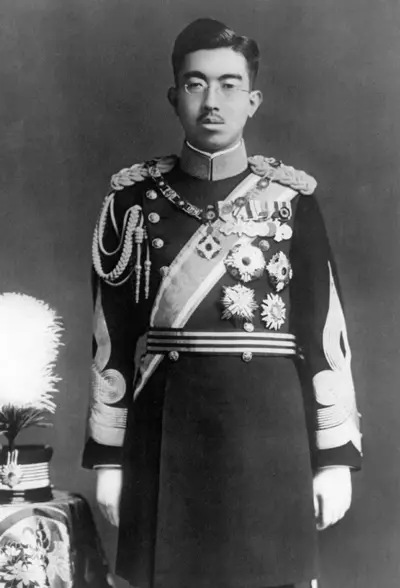
Emperor Shōwa, better known in English by his personal name Hirohito (裕仁), was the 124th emperor of Japan according to the traditional order of succession, ruling over the Empire of Japan from 25 December 1926 until 2 May 1947, after which he was Emperor of the state of Japan until his death. He was succeeded by his fifth child and eldest son, Akihito. Hirohito and his wife, Empress Kōjun, had seven children, two sons and five daughters. By 1979, Hirohito was the only monarch in the world with the title "emperor." Hirohito was the longest-lived and longest-reigning historical Japanese emperor and one of the longest-reigning monarchs in the world.
