Hirohito Quotes
We must bow to the inevitable. This is a good time to end the war.
Ironically, the Japanese Government and military were so polarized that it took several days for the authorities to get together and agree on a course of surrender action. The second atomic bomb dropped on Nagasaki speeded things up.
Hirohito, 1901-1990, Emperor of Japan, Statement to his staff after the atomic bombing of Hiroshima
Sourced by: Eigen's Political and Historical Quotations

1st Earl of Beaconsfield. Contrast this statement with that of Neville Chamberlain returning from Munich in 1941. Disraeli had threatened war and forced the Russians to accept all the British demands by diplomatically isolating them first and moving armed troops into position just before the peace conference.

Prior to this the Japanese had not even considered what terms they might fight for if there were to be a peace negotiation. What the Japanese leadership apparently totally missed was the fact that President Roosevelt and all other American leaders throughout the war had promised that only unconditional surrender would be acceptable. This was reiterated in a Joint Declaration of the U. S. , China, and Great Britain. The Japanese thought this just propaganda and never took it seriously.

Lee was trying to negotiate a peace treaty as a part of his his potential surrender. However, Grant would not be drawn into that, Lee was NOT the government of the Confederacy, and Grant had served with him earlier in the Mexican War and knew he was not a fanatic on teh subject of slavery and race as most of the Southern leaders were. They werenthe ones who would have to be captured or driven to surrender. Grant could have gotten authoirioty as he was in almost real time contact with President Lincoln by telegraph. However, neither wanted to negotiate peace with Lee. Instead, Grant gave Lee and his men incredibly gracious termsof surrender which he and Lincoln hoped would casue the avarage Southern soldiers to feel better about surrender for although Lee's was the largest Confederate Army, there were still others out there that had to be dealt with,


After the war Donitz was found guilty of Unrestricted Submarine Warfare and using thousands of slave laborers in his shipyards. He was sentenced to 10 years, one of the lightest sentences if the German War Crimes Trials.

President Lincoln and Several of the Commanding Union Generals had declared that black slaves were free during the midst of the Civil War under the legal theory that if the slaves were property of the rebels, then they cold be seized as “contraband” and removed from the control of those who had committed treason. The question was, what would happen to those now free Negroes after the war? Many Negro leaders were anxious that if there were surrender, then the status quo ante might prevail and the Negroes—many have who had fought for the Union might be returned to slavery. This speech by the Secretary of State alarmed them further. This is why the Emancipation Proclamation was so important and even that might have been overturned by a subsequent President. This is why Lincoln, the white radical Republicans and the Black leadership placed so much emphasis on passing the 13th Amendment.


This is the quotation that came to define Chamberlain’s naivety for history and the icon of failed diplomacy. However to see the beginning of the sequence of events that would lead up to this statement, see {585940} when Chamberlain suggested the infamous meeting in Munich. There had been an interesting history to Chamberlain’s appeasement of Germany. 39 years earlier, Chamberlain’s father, then Britain’s Colonial Secretary, and advocated a natural alliance with Germany. See Joseph Chamberlain, 1836-1914: {585939}.


After the Hiroshima bomb there was still no surrender by the Japanese. The decision was made to drop the second bomb on Nagasaki.
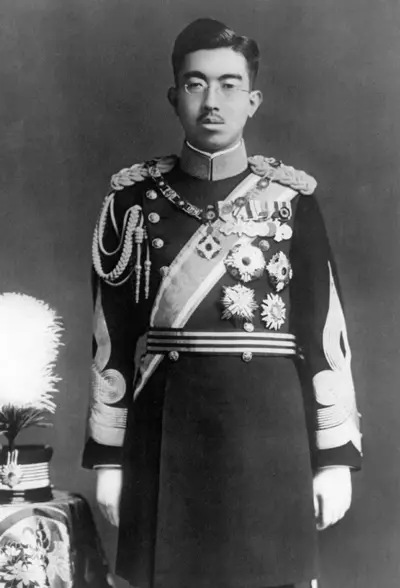
Emperor Shōwa, better known in English by his personal name Hirohito (裕仁), was the 124th emperor of Japan according to the traditional order of succession, ruling over the Empire of Japan from 25 December 1926 until 2 May 1947, after which he was Emperor of the state of Japan until his death. He was succeeded by his fifth child and eldest son, Akihito. Hirohito and his wife, Empress Kōjun, had seven children, two sons and five daughters. By 1979, Hirohito was the only monarch in the world with the title "emperor." Hirohito was the longest-lived and longest-reigning historical Japanese emperor and one of the longest-reigning monarchs in the world.
