Wilhelm II, German Emperor Quotes
Small countries such as Belgium would be well-advised to rally to the side of the strong if the wish to retain their independence.
This is the kind of threat that was used by Germany before the First World War. It worked with Turkey, but King Albert realized that being an “ally” of Germany meant losing independence anyway. Belgium would not join Germany, so the Germans invaded Belgium in 1914. Belgians fought with the allies and at the end of WWI, they were able to rebuild their independent state and thrive until they were again invaded by Germany in WWII. Turkey, in contrast, lost their entire empire, as a result of their fighting as German allies in WWI.
Wilhelm II, 1859-1941, Emperor of Germany & King of Prussia, Threat made to King Albert of Belgium, Berlin, November 1913
Sourced by: Eigen's Political and Historical Quotations


His appeal was also in the name of concurring heads of state of Finland, Holland, Denmark, Norway, Luxemburg, and Sweden.

This was a warning to Saudi Arabia that the United States might seize the oil fields. At the time we were not getting enough oil for domestic needs and the military in Europe and in Vietnam. The King arranged to secretly supply oil to the United States while maintaining to the other Arab countries that it was maintaining the boycott of the West.
See Benedict Spinosa for an earlier absense or war view. Also, JFK more recently.


The issue of unilateral or multilateral foreign policy efforts faced America after WWII.


On the United States’ competition with China:

Shortly thereafter the United States joined the allies and the First World War.
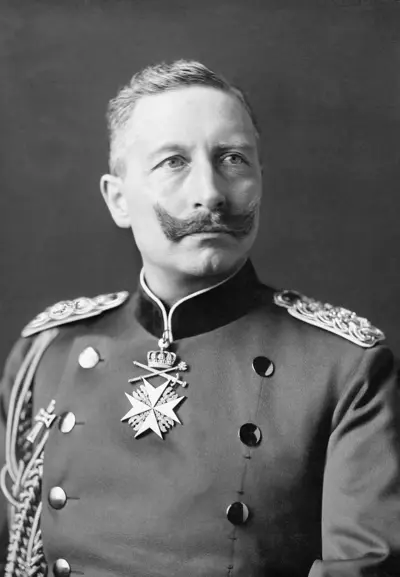
Wilhelm II, anglicised as William II, was the last German Emperor (Kaiser) and King of Prussia, reigning from 15 June 1888 until his abdication on 9 November 1918. Despite strengthening Germany's position as a great power by building a blue-water navy and promoting scientific innovation, his tactless public statements greatly antagonized the international community and his foreign policy was seen by many as one of the causes for the outbreak of World War I. When the German war effort collapsed after a series of crushing defeats on the Western Front in 1918, he was forced to abdicate, thereby bringing an end to the three-hundred-year rule of the House of Hohenzollern.
