Charles Pinckney Quotes
Conquest or superiority among other powers is not or ought not ever to be the object of republican systems.
Charles Pinckney, 1757-1824, South Carolina Delegate to the Constitutional Convention, Debate, Constitutional Convention, June 25, 1787
Sourced by: Eigen's Political and Historical Quotations


When whites first came to America, the Iroquois, were the most sophisticated Native Americans. They were actually a confederation of 5 different tribes each of which was composed if many clans. Although fierce warriors, they had agreed not to fight each other and to assist if any were attacked. They developed a strong agricultural base, to go with the fishing and hunting, and their confederation were very aggressive and sophisticated traders taking them far from their upstate New York “capitol.” Their governmental structure was quite sophisticated with an elaborate, formal, system of checks and balances, multi-cameral legislatures that recognized numbers of citizens, power and wealth, and even cultural traditions. They were literate, capitalistic and globalistic in that they wanted to trade with all. They had written laws, and women had a role that was unique in world history in that only women owned property in a matrilineal society. Further, it was only the Clan Mothers who voted for the 50 Sachems (~Senators)—but their selections had to be accepted by the people they represented. Ironically the descendants of the Iroquois who remained in New York became a very successful Native American group. In the 2000 census, the average Indian in New York State earned the same income as the average White with no Indian gambling money.


Many of his colleagues were concerned that there were relative power changes in the world and argued that no change should be tolerated by England. However, change is always in process although often it is not noticed until it has advanced and changed the balance of power. The rise of China, India and Brazil in the beginning of the 21st century are an example.

This is the kind of threat that was used by Germany before the First World War. It worked with Turkey, but King Albert realized that being an “ally” of Germany meant losing independence anyway. Belgium would not join Germany, so the Germans invaded Belgium in 1914. Belgians fought with the allies and at the end of WWI, they were able to rebuild their independent state and thrive until they were again invaded by Germany in WWII. Turkey, in contrast, lost their entire empire, as a result of their fighting as German allies in WWI.


Many of the French Revolutionists viewed the French Revolution as only the first step in a European revolution where all monarchies in Europe would be overthrown and popular rule installed throughout the continent. See Warville {585774} for an example. This obviously made the crowned heads of Europe and their governments very nervous. Other French Revolutionaries like Robespierre, however, wanted to assure the rest of Europe that the revolution was only a French affair so that they should not send troops to overthrow the French Revolution.


Eisenhower was clear on this point but the neoconservatives of the Republican party advocated just the opposite and decades later would influence American foreign policy to have a different view and aggressively export American democracy as in the Iraq War.


The US Congress passed the Magnitsky Act which allowed parties to sue in American Courts, Russian companies and individual wrongs committed against Russian Citizens in Russia. (The Russian prison system controlled by some corrupt powers in Russia had killed Magnitsky for exposing some massive corruption of some Russian officials. Although morally justified, legally the act was an interference in another nation’s internal affairs.) The Russians then banned the adoptions which actually hurt them far more than the U. S., but it was a retaliation which to maintain their dignity and sovereignty the Russians felt was necessary. It is an excellent example of the lack of predictability and reaction to various foreign policy moves. Retaliation could take any form, related or not, proportional or not, rational or not.


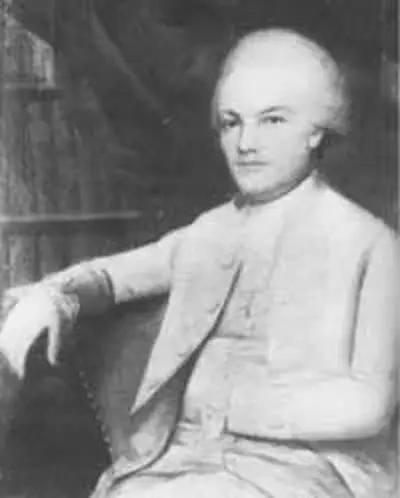
Charles Pinckney was an American planter and politician who was a signer of the United States Constitution. He was elected and served as the 37th Governor of South Carolina, later serving two more non-consecutive terms. He also served as a US Senator and a member of the House of Representatives. He was first cousin once removed of fellow signer Charles Cotesworth Pinckney.
