Graham Tillett Allison Jr. Quotes
When a rising power confronts a ruling power, bad things usually happen.... This is what happens when an extablished entity faces an upstart.... To avoid a disasterous clash like war, both parties have to make an adjustment, but the ruling power has to make more painful adjustments.
Graham Tillett Allison Jr., Interview with Judy Woodruff, PBS Evenening News, August 22, 2017
Sourced by: Eigen's Political and Historical Quotations


While this was a common attitude for years before, the horrors of World War II produced a general revulsion to war and an awareness that war between two nations spills over to other states in the region and in an era of globalization, effects countries in other parts of the world. So there has been a tendency to use diplomacy endlessly, even after "things have gone too far". Historically, when things reached that point, the parties did fight it out, and when one was weakened sufficiently, negotiations and diplomacy could then be fruitful.


A reversal of Calusewitz's famous dictum--see {361616}


When there is a serious problem with another country and it appears that military force may have to be used, he and most sophisticated policy makers argue that we should always try diplomacy first. If that does not work, then the military option is still open. If it does work, war or other military action is always available as an option. When politicians do not want to try diplomacy, it is usually that they have an ulterior motive for war and/or military force. Some urge caution with this principle in all cases as sometimes it gives the enemy time to regroup and rearm and he gets stronger by stringing out the negotiations with no intention of a diplomatic solution. In some other cases, as Iran in the second decade of the 21st century when they were suspected of developing a nuclear weapon. The Israeli right wing and some American conservatives wanted no delay in use of military force as that might allow the Iranians to complete an operational message. President Obama and most Americans favored strong economic sanctions with diplomacy first.


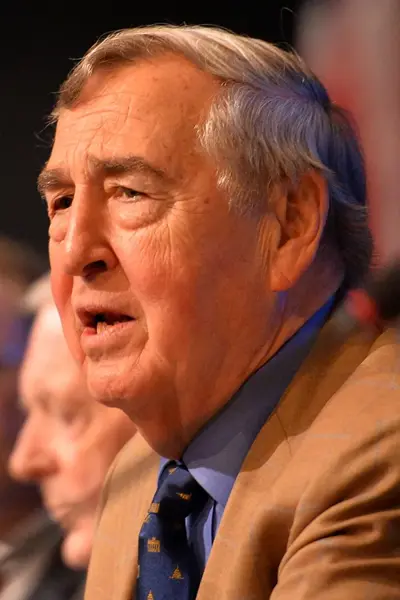
Graham Tillett Allison Jr. is an American political scientist and the Douglas Dillon Professor of Government at the John F. Kennedy School of Government at Harvard University. He is renowned for his contribution in the late 1960s and early 1970s to the bureaucratic analysis of decision making, especially during times of crisis. His book Remaking Foreign Policy: The Organizational Connection, co-written with Peter Szanton, was published in 1976 and had some influence on the foreign policy of the administration of President Jimmy Carter who took office in early 1977. Since the 1970s, Allison has also been a leading analyst of U.S. national security and defense policy, with a special interest in nuclear weapons and terrorism.
