Robert Browning Quotes
Let them fight it out, friend! Things have gone too far.
While this was a common attitude for years before, the horrors of World War II produced a general revulsion to war and an awareness that war between two nations spills over to other states in the region and in an era of globalization, effects countries in other parts of the world. So there has been a tendency to use diplomacy endlessly, even after "things have gone too far". Historically, when things reached that point, the parties did fight it out, and when one was weakened sufficiently, negotiations and diplomacy could then be fruitful.
Robert Browning, 1812-1889, British Poet, "Before"
Sourced by: Eigen's Political and Historical Quotations


Attila the Hun. They were discussing a structure for negotiating Attila’s grievance against Rome.

The highest court in New York.


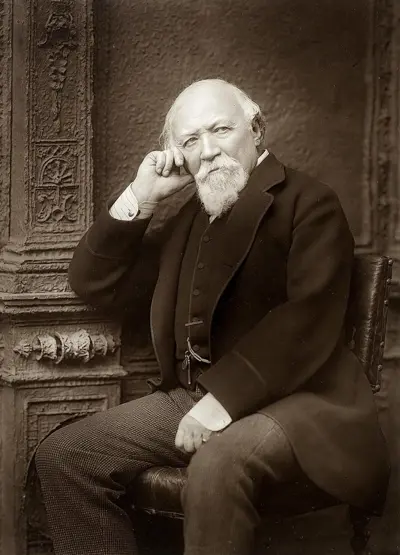
Robert Browning was an English poet and playwright whose dramatic monologues put him among the foremost Victorian poets. His poems are noted for irony, characterization, dark humour, social commentary, historical settings and challenging vocabulary and syntax. His career began well, but shrank for a time. The long poems Pauline (1833) and Paracelsus (1835) were acclaimed, but in 1840 Sordello was seen as wilfully obscure. His renown took over a decade to return, by which time he had moved from Shelleyan forms to a more personal style. In 1846 Browning married the older poet Elizabeth Barrett and went to live in Italy. By her death in 1861 he had published the collection Men and Women (1855). His Dramatis Personae (1864) and book-length epic poem The Ring and the Book (1868-1869) made him a leading British poet. He continued to write prolifically, but his reputation today rests mainly on his middle period. By his death in 1889, he was seen as a sage and philosopher-poet who had fed into Victorian social and political discourse. Societies for studying his work formed in his lifetime and survived in Britain and the United States into the 20th century.
