R. Nicholas Burns Quotes
We will be no worse if we try diplomacy and fail.
When there is a serious problem with another country and it appears that military force may have to be used, he and most sophisticated policy makers argue that we should always try diplomacy first. If that does not work, then the military option is still open. If it does work, war or other military action is always available as an option. When politicians do not want to try diplomacy, it is usually that they have an ulterior motive for war and/or military force. Some urge caution with this principle in all cases as sometimes it gives the enemy time to regroup and rearm and he gets stronger by stringing out the negotiations with no intention of a diplomatic solution. In some other cases, as Iran in the second decade of the 21st century when they were suspected of developing a nuclear weapon. The Israeli right wing and some American conservatives wanted no delay in use of military force as that might allow the Iranians to complete an operational message. President Obama and most Americans favored strong economic sanctions with diplomacy first.
R. Nicholas Burns, United States Under Secretary of State for Political Affairs, Senate Foreign Relations Committee Hearing, 2009
Sourced by: Eigen's Political and Historical Quotations


The Russians were breaking diplomatic relations with Israel.


The issue of force verses diplomacy has been in debate at almost all times. However, the issue of the conflict with Islam is much the same today—almost 1000 years later


The Chancellor was referring to the United States George W. Bush proposal for war with Iraq.


Israel had again been attacked by Arab armies and at the same time the parties were in peace negotiations. Some argued that there should be a cease fire while negotiations were ongoing, but Rabin explained that if the two did not go on simultaneously and independently, neither might go well.


Although Great Britain had abolished slavery, British economic interests during the Civil War suffered because of the northern blockade of the South. Much political opinion in England was hostile to the blockade policies of the Union. Bright, a great admirer and supporter of the United Sates and the Union cause was concerned that the United States might drift into War with Great Britain. His letter to Senator Sumner was written with the understanding that it would be in shared with President Lincoln, and it was actually read at a cabinet meeting.


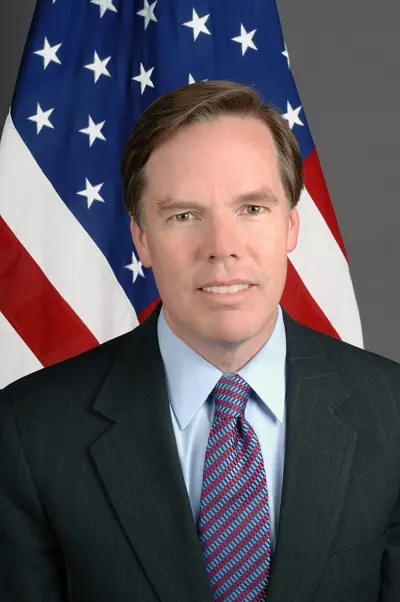
R. Nicholas Burns is a university professor, columnist, lecturer and former American diplomat. He is currently Professor of the Practice of Diplomacy and International Politics at Harvard's John F. Kennedy School of Government and a member of the Board of Directors of the school's Belfer Center for Science and International Affairs. At the Harvard Kennedy School, he is director of The Future of Diplomacy Project and Faculty Chair for the programs on the Middle East and India and South Asia. He is Director of the Aspen Strategy Group, senior counselor at The Cohen Group and serves on the Board of Directors of Entegris, Inc.
