ROBERT LANSING
The President was Woodrow Wilson and the Peace Conference was that at the end of WWI. While the right of self determination is broadly accepted in American society, it was not always so.
President Woodrow Wilson advocated the concept of self-determination for the newly freed countries of the Austro-Hungarian and Ottoman Empires. His Secretary of State disagreed sharply.
Shortly thereafter the United States joined the allies and the First World War.
This is a very important historical and political quotation. First, notice that the Secretary of State was criticizing the policies of his President, a refreshingly honest statement, but one which would never be made after the 1950s. The criticism was not even mild but very heavy. A political opponent could not be more negative. Next consider that while the Secretary of State and almost all the experienced diplomats thought the President foolishly wrong and naive about the practicality of self-determination, by the end of the 20th century, virtually every country in the world, capitalist, communist, secular or religious, wealthy or impoverished, all see self-determination is a basic right of all nations. The President was on the right side of history and all the professional diplomats on most nations were on the wrong side. However, Secretary of Lansing was right about one thing. The quest for self-determination has caused a fearful toll of human lives—not thousands as Lansing predicted but millions. He was also right about another aspect—namely that the unit of self-determination can be confusing and contentious. For example, the French Canadians of Quebec want a great deal of self determination and autonomy, but they do not want to give the same right of self-determination to the Mohawk Indians in Quebec who want to govern themselves. There is a continuous dispute in Turkey where the Kurds claim the right of self-determination within Turkey. Turkey has literally dozens of minority groups. Does self-determination mean that each can have its own nation within what is Turkey. And what about the Native Americans in the United States? Nonetheless, Wilson’s general principle is approved by all while the details are often contentious.
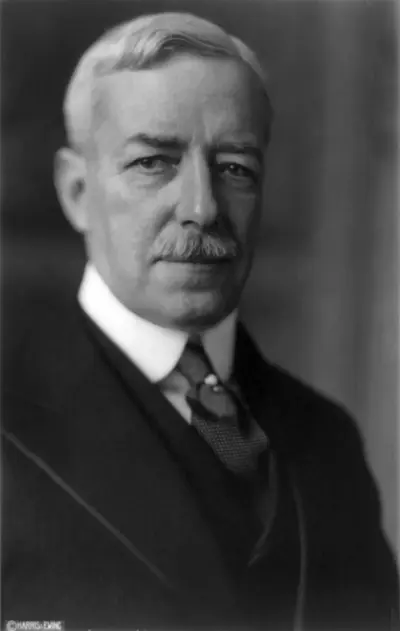
Robert Lansing was an American lawyer and diplomat who served as Counselor to the State Department at the outbreak of World War I, and then as United States Secretary of State under President Woodrow Wilson from 1915 to 1920. A conservative pro-business Democrat, he was pro-British and a strong defender of American rights at international law. He was a leading enemy of German autocracy and Russian Bolshevism. Before U.S. involvement in the war, Lansing vigorously advocated in favor of the principles of freedom of the seas and the rights of neutral nations. He later advocated U.S. participation in World War I, negotiated the Lansing–Ishii Agreement with Japan in 1917 and was a member of the American Commission to Negotiate Peace at Paris in 1919. However Wilson made Colonel House his chief foreign policy advisor because Lansing privately opposed much of the Versailles treaty and was skeptical of the Wilsonian principle of self-determination.
