Robert Lansing Quotes
The more I think about the President’s declaration as to the right of ‘self-determination’, the more convinced I am of the danger of putting such ideas into the minds of certain races. It is bound to be the basis of impossible demands on the Peace Conference and create trouble in many lands. What effect will it have on the Irish, the Indians, the Egyptians, and the nationalists among the Boers? Will it not breed discontent, disorder and rebellion? Will not the Mohammedans of Syria and Palestine and possibly Morocco and Tripoli rely on it?
The President was Woodrow Wilson and the Peace Conference was that at the end of WWI. While the right of self determination is broadly accepted in American society, it was not always so.
Robert Lansing, 1864-1928, U. S. Secretary of State (Democrat), The Peace Negotiations: A Personal Narrative, 1921
Sourced by: Eigen's Political and Historical Quotations


Shortly after the failed uprising the Mufti went to Berlin where he was made a Nazi SS Major General and set up Arab SS Units to exterminate the Jews in the Middle East. See {586894}.

This is a very important historical and political quotation. First, notice that the Secretary of State was criticizing the policies of his President, a refreshingly honest statement, but one which would never be made after the 1950s. The criticism was not even mild but very heavy. A political opponent could not be more negative. Next consider that while the Secretary of State and almost all the experienced diplomats thought the President foolishly wrong and naive about the practicality of self-determination, by the end of the 20th century, virtually every country in the world, capitalist, communist, secular or religious, wealthy or impoverished, all see self-determination is a basic right of all nations. The President was on the right side of history and all the professional diplomats on most nations were on the wrong side. However, Secretary of Lansing was right about one thing. The quest for self-determination has caused a fearful toll of human lives—not thousands as Lansing predicted but millions. He was also right about another aspect—namely that the unit of self-determination can be confusing and contentious. For example, the French Canadians of Quebec want a great deal of self determination and autonomy, but they do not want to give the same right of self-determination to the Mohawk Indians in Quebec who want to govern themselves. There is a continuous dispute in Turkey where the Kurds claim the right of self-determination within Turkey. Turkey has literally dozens of minority groups. Does self-determination mean that each can have its own nation within what is Turkey. And what about the Native Americans in the United States? Nonetheless, Wilson’s general principle is approved by all while the details are often contentious.


President Woodrow Wilson advocated the concept of self-determination for the newly freed countries of the Austro-Hungarian and Ottoman Empires. His Secretary of State disagreed sharply.


British colonial economics imported raw materials to England which then exported them back to the colonies as manufactured goods. Gandhi correctly calculated that by minimizing purchase of English cloth, colonial control of India would not be as profitable. Gandhi not only called for the boycott, but called on Indians to spin their own cloth, set an example be spinning himself, and his Congress party adopted the spinning wheel as its logo and symbol which continues today. Narcotics, was at the time not only legal, but British economic interests controlled much of the world narcotics trade. Gandhi’s call for a boycott of narcotics was as much an economic tactic as it was a health measure.


In 1937 the U. S. Treasury Department commissioned a pair of large murals to decorate the lobby or the Ariel Rios Federal Building in Washington DC. On the mural was depicted a U. S. Mail Service from Alaska to Puerto Rico. It showed four Puerto Rican women reading a letter in the Inuit dialect presumably delivered from Alaska. The authorities loved the mural until they discovered the translation of the Inuit letter. This was a direct reference to the Puerto Rican Nationalist Independence Movement. That year 18 Puerto Rican Nationalists were killed and over 100 wounded when police fired into a crowd of demonstrators on March 21. Kent, a famous artist, planted a newspaper story with the translation and soon media all over the company were drawing attention to the Puerto Rican movement, just as Kent had intended.


In most revolutionary settings leaders have to persuade people who have voted with no success to turn to the rifle. In Ireland at this point, almost all the nationalsits knew that the rifle would help them but they were not sure that a vote would have the effect of a bullet.


Chile with help from San Martin had ejected the Spanish. O’Higgins, the Chilean leader had joined up with San Martin and served under his command. The sectional rivalry bothered men like Carrera. Instead of seeing all the South Americans fighting the Spanish as allies as O’Higgins did, Carrera and his brothers refused to join a government of unity and they and their troops were just as dictatorial and cruel as the Spanish had been. O’Higgins gave Indians and Blacks equal rights with whites which distressed the aristocratic Carrera’s. Finally the Carrera’s tried to set up their own government, and the new Chilean government disarmed their militia and executed two of the three Carrera brothers who were leading the militia troops who were little more than thieves and brigands.

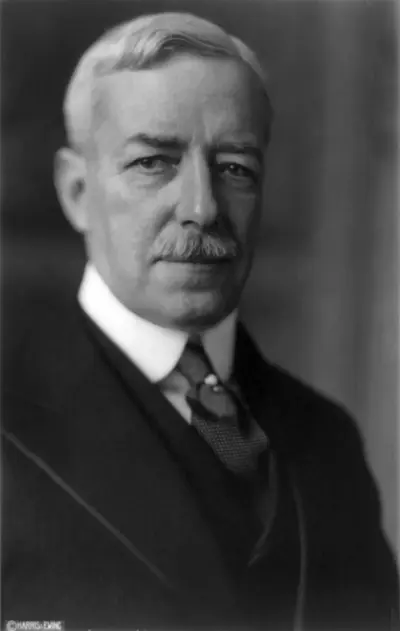
Robert Lansing was an American lawyer and diplomat who served as Counselor to the State Department at the outbreak of World War I, and then as United States Secretary of State under President Woodrow Wilson from 1915 to 1920. A conservative pro-business Democrat, he was pro-British and a strong defender of American rights at international law. He was a leading enemy of German autocracy and Russian Bolshevism. Before U.S. involvement in the war, Lansing vigorously advocated in favor of the principles of freedom of the seas and the rights of neutral nations. He later advocated U.S. participation in World War I, negotiated the Lansing–Ishii Agreement with Japan in 1917 and was a member of the American Commission to Negotiate Peace at Paris in 1919. However Wilson made Colonel House his chief foreign policy advisor because Lansing privately opposed much of the Versailles treaty and was skeptical of the Wilsonian principle of self-determination.
