Samuel Adams Quotes
No foreign Power can consistently yield Comfort to Rebels, or enter into any kind of Treaty with these Colonies until they [the Colonies] declare themselves free and independent.
Samuel Adams, 1722-1803, Member of the Continental Congress, Governor of Massachusetts, 1776, Quoted in Stephen E. Lucas, “Justifying America”
Sourced by: Eigen's Political and Historical Quotations

He was arrested and renditioned to Pakistan a few hours later. Nonetheless, the secession succeeded and Bangladesh became an independent country.


The document was signed in his name by his ministers.


For his seditious activities he was sentenced to penal servitude for life. He escaped and came to America where he entered politics


The highest court in New York. This was the generally accepted view of international law until WWII when atrocities and crimes against humanity were coped with. Also, at the time of this writing America was a small emerging state and not one of the great powers. Hence the prohibition of even commenting on the internal affairs of another nation was important to us. Now that America is a superpower, and society is more concerned with human rights, the point of view has changed.


In one of the most unusual revolutions in world history, Brazil became independent from Portugal via a revolution led by the son of the Portuguese King and heir to the throne, Pedro I. Ironically the King of Portugal, John VI, in this famous quote, encouraged his son to lead the revolution. There were strong separatist sentiment in Brazil and the King thought it would be better to have an independent Brazil lead by a member of his family.

See {585494},65902, and {585496}, for more quotations on this.


In 1837 and 1839 there were insurrections in Lower Canada against British rule. The British put down the rebellions and executed a few of the leaders.

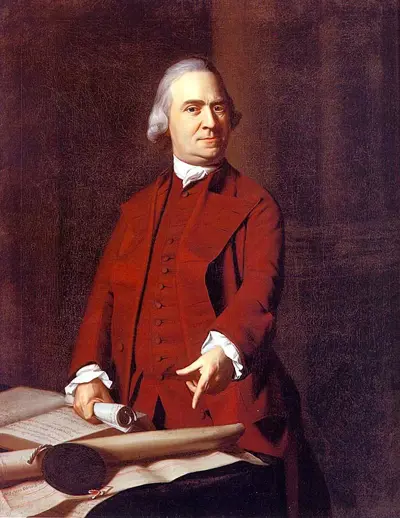
Samuel Adams was an American statesman, political philosopher, and one of the Founding Fathers of the United States. He was a politician in colonial Massachusetts, a leader of the movement that became the American Revolution, and one of the architects of the principles of American republicanism that shaped the political culture of the United States. He was a second cousin to his fellow Founding Father, President John Adams.
