James K. Polk Quotes
Foreign powers do not seem to appreciate the true character of our government.
James K. Polk, 1795-1849, 11th President of the United States (Democrat), Inaugural Address, March 4, 1845
Sourced by: Eigen's Political and Historical Quotations


The highest court in New York. This was the generally accepted view of international law until WWII when atrocities and crimes against humanity were coped with. Also, at the time of this writing America was a small emerging state and not one of the great powers. Hence the prohibition of even commenting on the internal affairs of another nation was important to us. Now that America is a superpower, and society is more concerned with human rights, the point of view has changed.


While this has been one of the great American principles of political philosophy, in reality we have on many occasions interfered when a people chose an enemy of the United States or made a choice of a government which would seize power and not allow any further free choices. However, from the time JFK made this statement to today, our foreign policy record has become much better on implementing this principle.


Under the Kissinger Foreign Policy this was his oft stated policy. The United States however gave a great deal of advice about their internal affairs to foreign leaders. Those that did not take it, did not get as much foreign or military aid, and sometimes found themselves ousted in a coup which resulted in a regime change or with their country being boycotted.


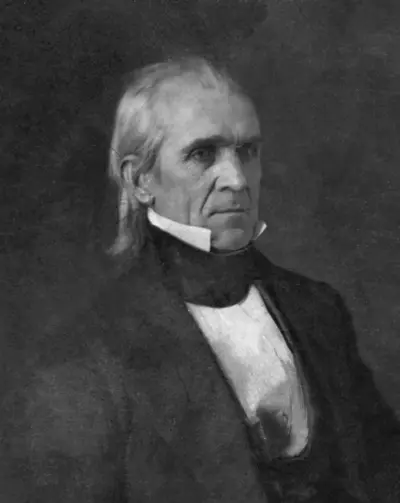
James Knox Polk was the 11th president of the United States, serving from 1845 to 1849. He previously was Speaker of the House of Representatives (1835–1839) and Governor of Tennessee (1839–1841). A protégé of Andrew Jackson, he was a member of the Democratic Party and an advocate of Jacksonian democracy. Polk is chiefly known for extending the territory of the United States through the Mexican–American War; during his presidency, the United States expanded significantly with the annexation of the Republic of Texas, the Oregon Territory, and the Mexican Cession following the American victory in the Mexican–American War.
