Najib Mikati Quotes
Historically, we were always complaining about others interfering in our domestic and national issues.
Mikati, Najib. "Lebanon's Mikati says will follow his own agenda." Interview by Samia Nakhoul. Reuters, 25 Jan. 2011.


The plan was to have an American agent with a few marines make an alliance with a rival to the throne of Algiers and depose the existing ruler with American “special forces”.


The highest court in New York. This was the generally accepted view of international law until WWII when atrocities and crimes against humanity were coped with. Also, at the time of this writing America was a small emerging state and not one of the great powers. Hence the prohibition of even commenting on the internal affairs of another nation was important to us. Now that America is a superpower, and society is more concerned with human rights, the point of view has changed.


See {640521} for the trigger of his anger. This is a good example of a politician using indiscreet hyperbolic terms in anger. In a different time, the President might have been accused of planning extermination and genocide of the Cuban people.

Under the Kissinger Foreign Policy this was his oft stated policy. The United States however gave a great deal of advice about their internal affairs to foreign leaders. Those that did not take it, did not get as much foreign or military aid, and sometimes found themselves ousted in a coup which resulted in a regime change or with their country being boycotted.

The President was reacting to the accusation made by Indonesian President Sukarno that the United States was sponsoring and supporting a civil war against his administration {591336}. The Secretary of State had testified before Congress that there was no U. S. involvement in Indonesia. However the CIA was financing the revolution and supplying war planes and pilots to the insurgents. See {591337}.


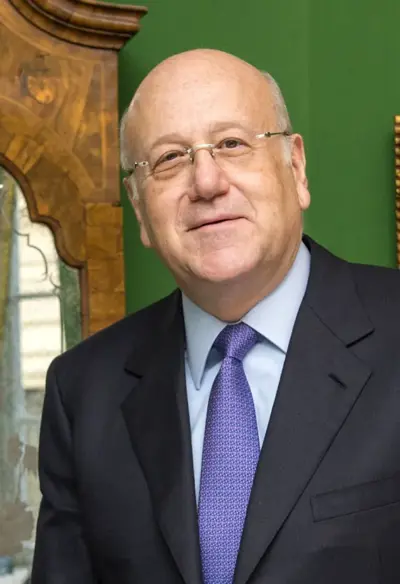
Najib Azmi Mikati is a Lebanese politician, and billionaire businessman, who served as Prime Minister of Lebanon in 2005 and from 2011 to 2014. From April 2005 to July 2005 he was Prime Minister of Lebanon in a caretaker government. On 25 January 2011, he was nominated to serve as Prime Minister by a majority of the votes in the parliamentary consultations following the 12 January fall of the Lebanese government of November 2009. The government was formed on 13 June 2011, after many delays. On 22 March 2013, Mikati submitted his resignation from office, which Lebanese president Michel Suleiman accepted on 23 March 2013.
