James Kent Quotes
Nations are equal in respect to each other, and entitled to claim equal consideration for their rights, whatever may be their relative dimensions or strength, or however greatly they may differ in government, religion, or manners. This perfect equality, and entire independence of all distinct states, is a fundamental principle of public law. It is a necessary consequence of this equality that each nation has a right to govern itself as it may think proper, and no one nation is entitled to dictate a form of government or religion, or a course of internal policy, to another. No state is entitled to take cognizance or notice of the domestic administration of another state, or of what passes within it as between the government and its own subjects
The highest court in New York. This was the generally accepted view of international law until WWII when atrocities and crimes against humanity were coped with. Also, at the time of this writing America was a small emerging state and not one of the great powers. Hence the prohibition of even commenting on the internal affairs of another nation was important to us. Now that America is a superpower, and society is more concerned with human rights, the point of view has changed.
James Kent, 1763-1847, Chief Justice of the New York State Court of Appeals Chancellor of New York State, Lectures in Law, Of The Rights And Duties Of Nations In A State Of Peace
Sourced by: Eigen's Political and Historical Quotations


Under the Kissinger Foreign Policy this was his oft stated policy. The United States however gave a great deal of advice about their internal affairs to foreign leaders. Those that did not take it, did not get as much foreign or military aid, and sometimes found themselves ousted in a coup which resulted in a regime change or with their country being boycotted.


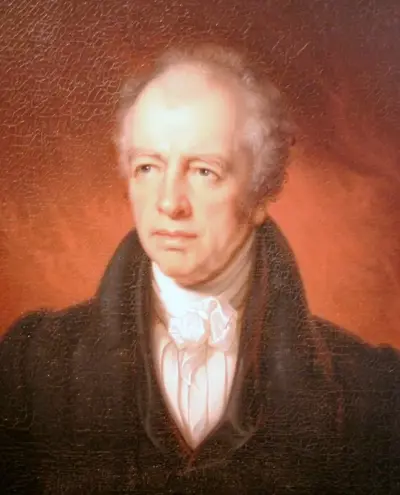
James Kent was an American jurist and legal scholar. He was the author of Commentaries on American Law.
