Wilfrid Laurier Quotes
I claim for Canada this, that in future Canada shall be at liberty to act or not act, to interfere or not interfere, to do just as she pleases, and that she shall reserve to herself the right to judge whether or not there is cause for her to act.
Canada, Parliament, House of Commons. Official Report of the Debates of the House of Commons. 11th Parliament, 2nd Session, 3 Feb. 1910, p. 2958.

He particularly had difficulty with the Pope and whose authority was supposed to be dominant in Europe. King Henry left the Catholic Church and made Protestantism the official English Church. It has been such ever since—all the result of a power struggle between two men.

He was a poor governor in general and was fired and replaced by the Dutch East India Company which was a happy occurrence for the colonists. The company was a money making institution and depended on colonists who would farm, trade and manufacture. If they were unhappy, the company would not profit. They would not have minded a tyrant if he could produce profits as some did in the Dutch East Indies, but Kieft was a loser on all counts.


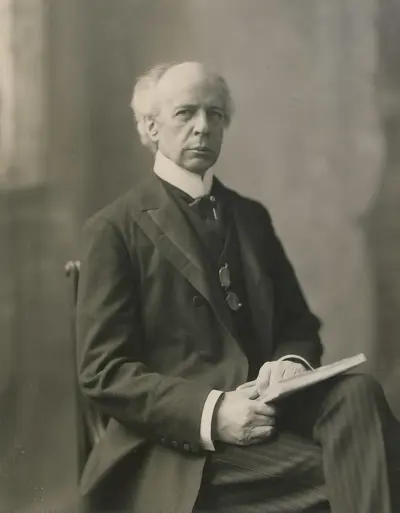
The second child of Carolus Laurier and Marcelle Martineau, Wilfrid Laurier was born in Saint-Lin, Canada East (modern day Saint-Lin-Laurentides, Quebec), on 20 November 1841. Laurier was among the seventh generation of his family in Canada. He was a sixth-generation Canadian. His ancestor François Cottineau, dit Champlaurier, came to Canada from Saint-Claud, France. He grew up in a family where politics was a staple of talk and debate. His father, an educated man having liberal ideas, enjoyed a certain degree of prestige about town. In addition to being a farmer and surveyor, he also occupied such sought-after positions as mayor, justice of the peace, militia lieutenant and school board member. At the age of 11, Wilfrid left home to study in New Glasgow, a neighbouring village largely inhabited by immigrants from Scotland. Over the next two years, he familiarized himself with the mentality, language and culture of British people. Laurier attended the Collège de L'Assomption and graduated in law from McGill University in 1864.
