Lech Walesa Quotes
As a nation we have the right to decide our own affairs, to mould our own future. This does not pose any danger to anybody. Our nation is fully aware of the responsibility for its own fate in the complicated situation of the contemporary world.
Wałęsa, Lech. "Nobel Lecture." NobelPrize.org, Nobel Prize Outreach AB, 11 Dec. 1983.


The highest court in New York. This was the generally accepted view of international law until WWII when atrocities and crimes against humanity were coped with. Also, at the time of this writing America was a small emerging state and not one of the great powers. Hence the prohibition of even commenting on the internal affairs of another nation was important to us. Now that America is a superpower, and society is more concerned with human rights, the point of view has changed.


The Ottoman Turks, at war with Russia, exterminated a large proportion of the Armenian population of the then Turkish Empire. Some of the ethnic Armenians were working with Armenians in greater Russia and thus were a risk to the Turks. However, they starved, shot, beat, hung, and bayoneted hundreds of thousands of ethnic Armenians, wiping out entire villages and towns. Despite the fact that women and little children were all killed, Modern Turkey even into the 21st century refused to admit that this was a genocide even though there was ample documentation to prove it was not spontaneous but government ordered by the “Young Turks” then controlling Turkey. See {620603} and {612638} for examples. The modern Turks maintain the view expressed during the genocide that Armenians were a threat to Turkish Independence.


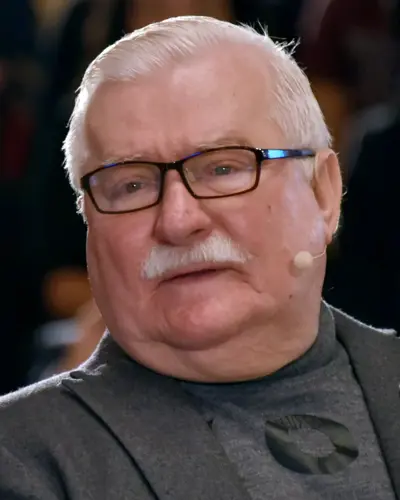
Lech Wałęsa is a Polish statesman, dissident, and Nobel Peace Prize laureate, who served as the first democratically elected president of Poland from 1990 to 1995. A shipyard electrician by trade, he became the leader of the Solidarity movement, and led a successful pro-democratic effort which in 1989 ended the Communist rule in Poland and ushered in the end of the Cold War.
