Boutros Boutros-Ghali Quotes
National boundaries are blurred by advanced communications and global commerce, and by the decisions of States to yield some sovereign prerogatives to larger, common political associations.
Boutros Boutros-Ghali, Secretary General of the United Nations, Deputy Prime Minister, Egypt, An Agenda for Peace : Preventive diplomacy, peacemaking and peace-keeping, 1992
Sourced by: Eigen's Political and Historical Quotations

He was one of the first to recognize this phenomenon. See the related quotes for others who were early observers of the coming changes.


A decade after he made this observation, the external economic markets were not happy with the ways the Greek Government had handled the economy and the nation became insolvent. The IMF, World Bank and the other European nations bailed Greece out be making emergency loans, but then they imposed conditions on the Greek Government that was completely contrary to what the Greek politicians and the Greek voters wanted. The Greek national government had almost no control over their own economy.


This is an incredibly prescient quotation. Dewey saw globalization starting before most realized the change. He wrote this in 1916. Almost a century later, we live with the results of the process that he described.


Those environmentalists who take this view do not give credence to other alternatives. For example, the same argument of environmental decision-making could logically justify one superpower nation taking over the government of all others on the planet for environmental matters. Another possibility is that the existing mechanisms and the UN are sufficient if the major powers reach agreement. Another is that science and technology will provide solutions.

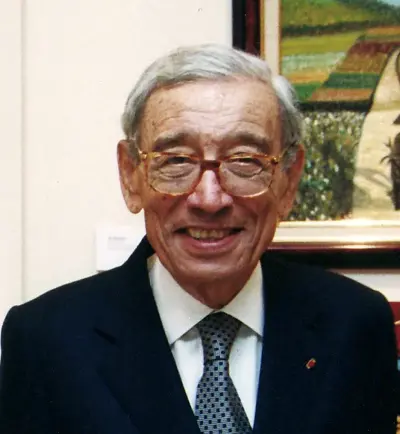
Boutros Boutros-Ghali was an Egyptian politician and diplomat who was the sixth Secretary-General of the United Nations (UN) from January 1992 to December 1996. An academic and former Vice Foreign Minister of Egypt, Boutros-Ghali oversaw the UN over a period coinciding with several world crises, including the breakup of Yugoslavia and the Rwandan genocide. He went on to serve as the first Secretary-General of the Organisation internationale de la Francophonie from 16 November 1997 to 31 December 2002.
