William Jennings Bryan Quotes
This nation is able to legislate for its own people on every question, without waiting for the aid or consent of any other nation on earth.
William Jennings Bryan, 1860-1925, U. S. Secretary of State, U. S. Congressman (Democrat, NB), 3 Time Unsuccessful Democratic Presidential Candidate, Speech, July 8, 1896
Sourced by: Eigen's Political and Historical Quotations


The Ottoman Turks, at war with Russia, exterminated a large proportion of the Armenian population of the then Turkish Empire. Some of the ethnic Armenians were working with Armenians in greater Russia and thus were a risk to the Turks. However, they starved, shot, beat, hung, and bayoneted hundreds of thousands of ethnic Armenians, wiping out entire villages and towns. Despite the fact that women and little children were all killed, Modern Turkey even into the 21st century refused to admit that this was a genocide even though there was ample documentation to prove it was not spontaneous but government ordered by the “Young Turks” then controlling Turkey. See {620603} and {612638} for examples. The modern Turks maintain the view expressed during the genocide that Armenians were a threat to Turkish Independence.


Under the Kissinger Foreign Policy this was his oft stated policy. The United States however gave a great deal of advice about their internal affairs to foreign leaders. Those that did not take it, did not get as much foreign or military aid, and sometimes found themselves ousted in a coup which resulted in a regime change or with their country being boycotted.


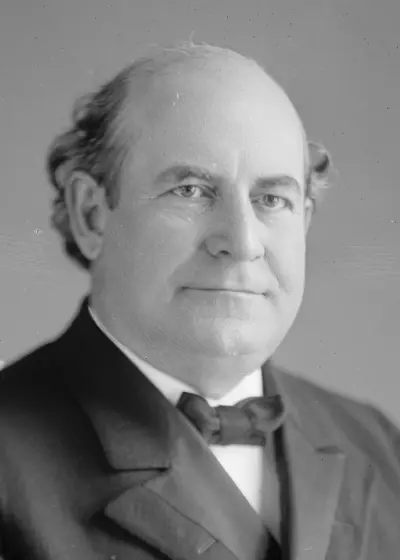
William Jennings Bryan was an American orator and politician from Illinois and Nebraska. Beginning in 1896, he emerged as a dominant force in the Democratic Party, running three times as the party's nominee for President of the United States in the 1896, 1900, and 1908 elections. He also served in the United States House of Representatives and as the United States Secretary of State under Woodrow Wilson. Because of his faith in the wisdom of the common people, he was often called "The Great Commoner".
