George Washington Quotes
My ardent desire is... to keep the United States free from political connexions with every other Country. To see that they may be independent of all, and under the influence of none.
Washington, George. "From George Washington to Patrick Henry, 9 October 1795." The Papers of George Washington, Presidential Series, vol. 19, University of Virginia Press, 2016, pp. 26-28.


Under the Kissinger Foreign Policy this was his oft stated policy. The United States however gave a great deal of advice about their internal affairs to foreign leaders. Those that did not take it, did not get as much foreign or military aid, and sometimes found themselves ousted in a coup which resulted in a regime change or with their country being boycotted.


See {585494},65902, and {585496}, for more quotations on this.

Inscribed in the John Adams Building of the Library of Congress. On this subject Jefferson was in agreement with George Washington {37176} and his political opponent, John Adams {592705}.


The highest court in New York. This was the generally accepted view of international law until WWII when atrocities and crimes against humanity were coped with. Also, at the time of this writing America was a small emerging state and not one of the great powers. Hence the prohibition of even commenting on the internal affairs of another nation was important to us. Now that America is a superpower, and society is more concerned with human rights, the point of view has changed.


While this has been one of the great American principles of political philosophy, in reality we have on many occasions interfered when a people chose an enemy of the United States or made a choice of a government which would seize power and not allow any further free choices. However, from the time JFK made this statement to today, our foreign policy record has become much better on implementing this principle.


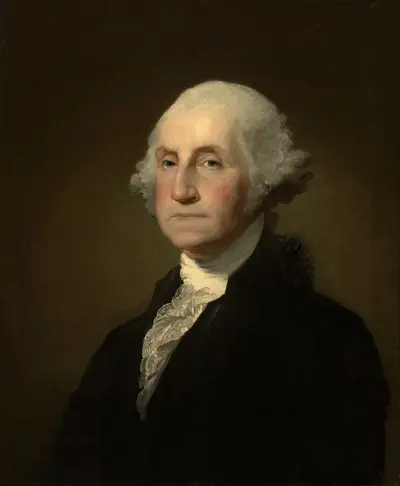
George Washington was the first President of the United States (1789-97), the Commander-in-Chief of the Continental Army during the American Revolutionary War, and one of the Founding Fathers of the United States. He presided over the convention that drafted the current United States Constitution and during his lifetime was called the "father of his country".
