Richard Henry Lee Quotes
These colonies are, and of right ought to be, individual states.
Richard Henry Lee, 1732-1794, Member of the Continental Congress, Signer of the Declaration of Independence, U.S. Senator (VA), Speech, Continental Congress, June 7, 1776
Sourced by: Eigen's Political and Historical Quotations

Madison was defending the proposed Constitution against a vocal minority who complained that the Federal government would be dominant over the States and the large cities. Madison pointed out that it was people who fought the Revolution and sacrificed for it, not States or political entities. The Constitution was to be for the people, not the existing governmental entities. It was for Americans and not for local politicians. The “State’s Rights faction lost the debate, and the Constitution and Bill of Rights was adopted. That is why this quotation is so important. The slavery enthusiasts, racists, and others have constantly tried to diminish the Federal supremacy even to this day.


The document was signed in his name by his ministers.


A group of citizens of Mecklenburgh County, NC gathered together and produced their own “Declaration of Independence” a little over a year before The Declaration of Independence of July 4, 1776. Some people refer to the earlier document as the Mecklenburgh Declaration of Independence. It is not known how much Alexander personally wrote however he signed as the Chairman of the convention. The delegates voted to send a copy to the Continental Congress, and the reader will recognize some of the similar language which found its way into the 1776 document. The Mecklenburgh Resolution also contained a structure of government.

“Esto perpetua” is Latin for “May it be forever”. Ireland had just obtained the right from England to pass their own laws in their own parliament. They were still under English control but now they were like a colony and not under day-to-day control.


In Philadelphia, the state delegates had just started to vote for independence. The majority of each state delegation determined the vote for the state. Delaware had three delagates, but only two were in Philadelphia. Rodney, the third delegate from Delaware, had been attending a meeting in Dover when he received word that the other two Delaware delagates Thomas McKean and George Read were split—McKean for and Read against independence. Rodney immediately left for Philadelphia late on July 1. He rode all night in a thunderstorm to traverse the 80 miles to Philadelphia. He arrived in his spurs and riding boots and cast his famous vote and thus Delaware voted for Independence. After the vote, the next 2 days were spent drafting the Declaration of Independence and Rodney signed it on July 4. After Rodney returned to Delaware, he was ousted in the next election by conservative loyalists who felt that Rodney had betrayed them and England.

This resolution of independence was voted upon a month before the Declaration of Independence. It was approved by 12 of the colonies but not by New York. The Congress appointed a committee to draft what became the Declaration of Independence and that was approved by all the colonies. The resolution was introduced by Richard Henry Lee on instructions from Virginia. The graphic is of Lee’s original notes.


The state tried to nullify a Federal law in the early part of this ordinance {592185}. In this latter part South Carolina threatened to secede if the Federal Government were to try and enforce the tariff. This was their first threat of secession. They did not go through with it, but over 30 years later were the first Southern state to rebel and secede from the Union, The protectionist tariff was instituted to support American domestic manufacturers from competition from England and the rest of Europe. America then was an emerging underdeveloped country, but it would not take too long before America developed the best manufacturing in the world. The South was generally opposed to the tariff as they had little manufacturing to protect, and because of their slave labor system was not interested much in manufacturing, but since they had to pay more for manufactured items, they opposed the tariff. Also the maritime ports of New England who lost the shipping trade from Europe were opposed. Generally the rest of the country favored it. To compromise, the Jackson administration lowered the tariff slightly, but that did not satisfy the opponents, who continued to fight it.


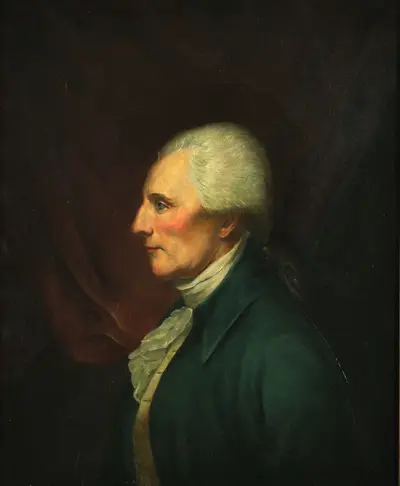
Richard Henry Lee was an American statesman and Founding Father from Virginia, best known for the June 1776 Lee Resolution, the motion in the Second Continental Congress calling for the colonies' independence from Great Britain leading to the United States Declaration of Independence, which he signed. He also served a one-year term as the President of the Continental Congress, was a signatory to the Articles of Confederation, and was a United States Senator from Virginia from 1789 to 1792, serving during part of that time as the second President pro tempore of the upper house.
