South Carolina Quotes
The people of this State will henceforth hold themselves absolved from all further obligation to maintain or preserve their political connection with the people of the other States; and will forthwith proceed to organize a separate government, and do all other acts and things which sovereign and independent States may of right do.
The state tried to nullify a Federal law in the early part of this ordinance {592185}. In this latter part South Carolina threatened to secede if the Federal Government were to try and enforce the tariff. This was their first threat of secession. They did not go through with it, but over 30 years later were the first Southern state to rebel and secede from the Union, The protectionist tariff was instituted to support American domestic manufacturers from competition from England and the rest of Europe. America then was an emerging underdeveloped country, but it would not take too long before America developed the best manufacturing in the world. The South was generally opposed to the tariff as they had little manufacturing to protect, and because of their slave labor system was not interested much in manufacturing, but since they had to pay more for manufactured items, they opposed the tariff. Also the maritime ports of New England who lost the shipping trade from Europe were opposed. Generally the rest of the country favored it. To compromise, the Jackson administration lowered the tariff slightly, but that did not satisfy the opponents, who continued to fight it.
South Carolina, Ordinance of Nullification, November 24, 1832
Sourced by: Eigen's Political and Historical Quotations


Madison was defending the proposed Constitution against a vocal minority who complained that the Federal government would be dominant over the States and the large cities. Madison pointed out that it was people who fought the Revolution and sacrificed for it, not States or political entities. The Constitution was to be for the people, not the existing governmental entities. It was for Americans and not for local politicians. The “State’s Rights faction lost the debate, and the Constitution and Bill of Rights was adopted. That is why this quotation is so important. The slavery enthusiasts, racists, and others have constantly tried to diminish the Federal supremacy even to this day.

Jackson makes the case against the South Carolina argument for nullification. In the related quote, he makes his threat which was very successful in ending the notion of “nullification”. The extensive quotation is given as it summarizes the entire issue that was one of the crises of early America.
At the time his Vice President, John C. Calhoun, was expounding a theory of “nullification” by which the states could supersede and nullify federal law in their states. When Jackson finished his toast, it was Calhoun’s turn (See {635896}.) His toast supported the States’ Rights position over the federal government. In those days Presidents and Vice President’s were often political enemies or of opposite parties. The President’s advisors thought that his toast might be misinterpreted. So when they gave the toast to the press as “The Federal Union: It must be preserved.” That was the form in which the press reported the President’s toast and for many years that was the version most quoted even though it was never delivered that way. However Jackson was responsible for both versions.


Compare Abraham Lincoln's Liberty And Union.
In the related quote, Jackson makes the case against the South Carolina argument for nullification. Here he makes his threat which was very successful in ending the notion of “nullification”. The extensive quotation is given as it summarizes the entire issue that was one of the crises of early America.


The document was signed in his name by his ministers.


He was arrested and renditioned to Pakistan a few hours later. Nonetheless, the secession succeeded and Bangladesh became an independent country.
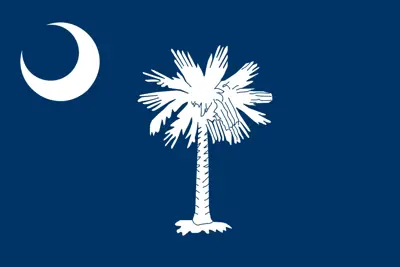
South Carolina (/ˌkærəˈlaɪnə/ (listen)) is a state in the Southeastern region of the United States. It is bordered to the north by North Carolina, to the southeast by the Atlantic Ocean, and to the southwest by Georgia across the Savannah River. South Carolina is the 40th most extensive and 23rd most populous U.S. state. In 2019 its GDP was $213.45 billion. South Carolina is composed of 46 counties. The capital is Columbia with a population of 133,273 in 2019; while its largest city is Charleston with a 2019 population of 135,257. The Greenville–Anderson–Mauldin metropolitan area is the largest in the state, with a 2018 population estimate of 906,626.
