Andrew Jackson Quotes
The dictates of a high duty oblige me solemnly to announce that you cannot succeed. The laws of the United States must be executed. I have no discretionary power on the subject--my duty is emphatically pronounced in the Constitution. Those who told you that you might peaceably prevent their execution, deceived you-they could not have been deceived themselves. They know that a forcible opposition could alone prevent the execution of the laws, and they know that such opposition must be repelled. Their object is disunion, hut be not deceived by names; disunion, by armed force, is TREASON. Are you really ready to incur its guilt? If you are, on the head of the instigators of the act be the dreadful consequences-on their heads be the dishonor, but on yours may fall the punishment-on your unhappy State will inevitably fall all the evils of the conflict you force upon the government of your country. It cannot accede to the mad project of disunion, of which you would be the first victims-its first magistrate cannot, if he would, avoid the performance of his duty-the consequence must be fearful for you, distressing to your fellow-citizens here, and to the friends of good government throughout the world.
In the related quote, Jackson makes the case against the South Carolina argument for nullification. Here he makes his threat which was very successful in ending the notion of “nullification”. The extensive quotation is given as it summarizes the entire issue that was one of the crises of early America.
Andrew Jackson, 1767-1845, 7th President of the United States (Democrat, TN), Proclamation Regarding Nullification, December 10, 1832
Sourced by: Eigen's Political and Historical Quotations

Jackson makes the case against the South Carolina argument for nullification. In the related quote, he makes his threat which was very successful in ending the notion of “nullification”. The extensive quotation is given as it summarizes the entire issue that was one of the crises of early America.


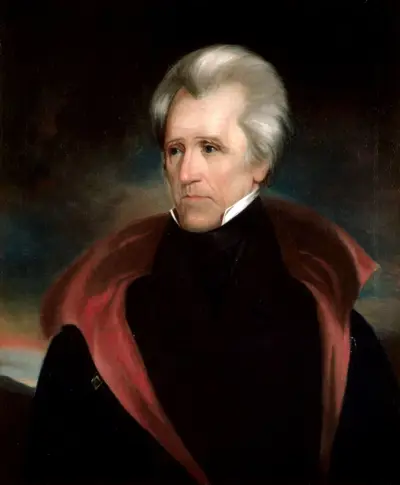
Andrew Jackson was an American lawyer, soldier, and statesman who served as the seventh president of the United States from 1829 to 1837. Before being elected to the presidency, Jackson gained fame as a general in the United States Army and served in both houses of the U.S. Congress. An expansionist president, Jackson sought to advance the rights of the "common man" against a "corrupt aristocracy" and to preserve the Union.
