Thomas Bragg Quotes
Our Northern brethren will discover that the Southern States intended to be equals in the Union, or independent out of it!
Bragg and other Southerner leaders had an unusual concept of equality. Ever since the original Constitution, Northerner’s votes counted for themselves only while a single Southerner’s vote counted for all his slaves as well. So the individual Southerner always had more political power than his Northern counterpart. However, this notion of equality reached it’s acme when it came to the new territories. The Southern argument was that Southerners could not equally prosper in the new territories of Kansas and Nebraska if they could not bring their slaves to work the land. The thought that Southerners were equally able to personally work the new lands or pay labor seems to never have occurred to them. If Northerners could prosper that way then Southerners should be equally able to do so also. However, many Southern whites simply could not conceive of a “gentleman” working in the fields. Therefore they would not be equally able to prosper in the new territories.
Thomas Bragg, 1810-1872, U. S. Senator (Democrat, NC), North Carolina Governor, Attorney General of the Confederacy, Quoted in Avery O. Craven, The Growth of Southern Nationalism
Sourced by: Eigen's Political and Historical Quotations


The amendments failed as did the compromise.


The Vice President and the President were at odds over the theory of “nullification” by which the states could supersede and nullify federal law of action in their states. The President had just given a toast to the Preservation of the Union (See {587324}). So Calhoun embellished upon it and gave this toast. The President then strengthened the version of his toast that was given to the press so that it was clear that he did not support his Vice President’s position on nullicication.


The “mystic chords of memory” which is one of the most famous Lincoln phrases. As great as this address was, it did not succeed in its purpose of maintaining the Union and preventing secession.


At the time his Vice President, John C. Calhoun, was expounding a theory of “nullification” by which the states could supersede and nullify federal law in their states. When Jackson finished his toast, it was Calhoun’s turn (See {635896}.) His toast supported the States’ Rights position over the federal government. In those days Presidents and Vice President’s were often political enemies or of opposite parties. The President’s advisors thought that his toast might be misinterpreted. So when they gave the toast to the press as “The Federal Union: It must be preserved.” That was the form in which the press reported the President’s toast and for many years that was the version most quoted even though it was never delivered that way. However Jackson was responsible for both versions.
Gusley had been captured by the Confederates and was in a prison camp. Richardson published Gusley’s diary and Southerners were surprised to find that this Yankee who had been bombarding them from a ship was very similar to them in many ways including slavery but saw the situation regarding succession as worth fighting for preservation of the Union.

Maryland was the last state to ratify the Articles of Confederation, not doing so until March 1, 1781.

The Prime Minister had a penchant for mis-assessing world affairs in both the old world and the new.

The American Civil War was followed by intellectuals throughout the world. Most were offended by the immorality of the slavery that the South was fighting to maintain, but admired the way they organized and fought for their principles.

In many respects, it is amazing that secession did not take place earlier.

This editorial reflected majority Southern political positions of the time. There was never going to be any compromise by ending or curtailing slavery in any way. Amongst the abolitionists, there was an equally rigid view towards compromise. Many Northerners felt that the anti-slavery Americans had been compromising for half a century and slavery was a larger institution that it ever was. They wanted no further compromise. The South had never budged from its original position at the founding of the nation. Historically, it was just a matter of time before there would be a showdown politically and probably militarily. The explosion took 10 more years.

After the Presidential years of James Buchanan who protected the South from slavery reform and abolition as the North was gaining political power and the abolitionists were having a greater and greater effect on public opinion in the North. While Southerners did not believe Lincoln would emancipate the slaves, they realized that the majority of the growing nation was opposed to slavery, and more and more Northern states were passimg laws making any slave who sets foot in the State a free person. Slaves coud not only have more reason to run away, but slave owners would not be able to get their “property” back. Lincoln would not help the South as Buchanan did, and the Southerners realized that over time, slavery would no longer be feasible or profitable. Cobb, very experienced at Washington politics, realized the changes that would come and thought that they would be “certain and speedy.” The irony was that if the South had not seceded and simply dragged its feet legislatively, it would have taken two or three decades for slavery to end. However, by seceding and initially fighting so hard and well while poor Union generals were in command, Lincoln was forced to try more drastic measures and issued the Emancipation Proclamation after only a few years. The Civil War and seccession was not only a tactical and strategic error for the South, but rapidly brought about just what the Southerners were fighting to prevent.
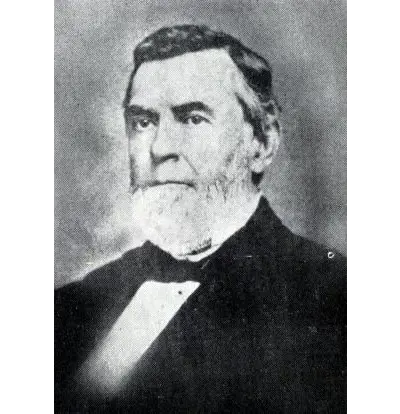
Thomas Bragg was an American politician and lawyer who served as the 34th Governor of the U.S. state of North Carolina from 1855 through 1859. During the Civil War, he served in the Confederate States Cabinet. He was the older brother of General Braxton Bragg. They were direct descendants of Thomas Bragg (1579–1665) who was born in England and settled in the Virginia Colony.
