GEORGE TEMPLETON STRONG
He was not aware of it but the Union War Department had prepared well and additional ironclad ships under construction of which the Monitor was just the first. Lincoln had approved the construction of ironclads on October 4, 1861. The Confederate Merrimack was larger and to the layman was the stronger ship but the Monitor did some damage and drove the Confederate Merrimac from the field to make repairs. The Confederacy, with minimal industrial steel-making capacity could not produce enough steel to protect more ships than the one ironclad Merrimack. The Union Navy, not only were building more Monitor class ships, but also, had a few Merrimack type wooden ships being iron clad as well as their Monitors as Strong had called for. The Union soon totally dominated the seas and as important, the rivers with which they could supply Union troops and bombard Confederate cities built thereupon.
To justify slaveholding in one’s own mind, religion, culture, values, concepts of write & wrong all have to be twisted and when a substantial group of people do that for a number of decades, the do not form a different race but they certainly do become a different cultural subgroup. The hypocrisy of slavery and a free society is the ultimate twist of logic. Also, many modern psychologists have analyzed the extremely cruel and inhuman tortures and punishment that slave owners meted out and observed as strongly suggested abnormally sadistic perversions present in so many.
Strong is referring to the popular support of Abraham Lincoln’s candidacy in Western states.
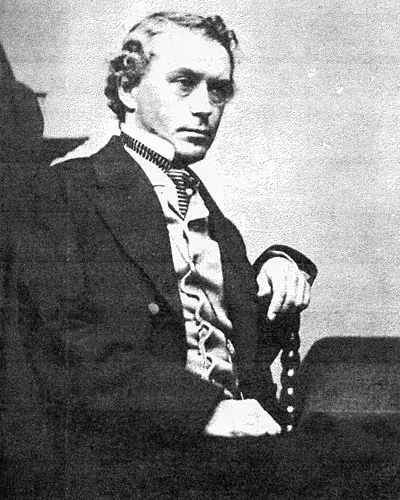
George Templeton Strong was an American lawyer, musician and diarist. His 2,250-page diary, discovered in the 1930s, provides a striking personal account of life in the 19th century, especially during the events of the American Civil War. It covers 1835 to 1875. The historian Paula Baker described him as "perhaps the northern equivalent of South Carolina's Mary Chesnut: quotable, opinionated, and a careful follower of events." He was a well-placed civic leader who was very well known in New York City. He served with distinction on the United States Sanitary Commission during the Civil War. But he never occupied top positions and had no special influence.
