George Templeton Strong Quotes
Everyone’s future has changed in these six months last past. This is to be a terrible, ruinous war, and a war in which the nation cannot succeed. It can never subjugate these savage millions of the South. It must make peace at last with the barbarous communities off its Southern frontier. I was prosperous and well off last November. I believe my assets to be reduced fifty per cent, at least. But I hope I can still provide wholesome training for my three boys. With that patrimony they can fight out the battle of life for themselves. Their mother is plucky and can stand self-denial. I clearly see that this is a most severe personal calamity to me, but I welcome it cordially, for it has shown that I belong to community that is brave and generous, and that the City of New York is not sordid and selfish.
George Templeton Strong, 1820-1875, New York Sanitary Commission, Diary, April 23, 1861
Sourced by: Eigen's Political and Historical Quotations


Wade was one of the Radical Republicans who advocated a much more vigorous prosecution of the Civil War effort in the North. It is important for two reasons: First, it illustrates the position of the “Hawks” who constantly pressured Lincoln to counter the Democrat lack of enthusiasm for the fighting. Many believed that the South would come to its senses and end the rebellion. Second and more important, this is one of the quotations that apologists for the South during the Jim Crow segregation issue use to show that there was a strong desire to impoverish the South. This is partly true. Wade and the other radicals did argue to impoverish the South only so long as they were continuing the war and rebellion. They did not argue that the South should be impoverished after the war was over. However, the reality was that the Southern economy had become so dependent on slave labor, that after Emancipation, it was very difficult to rebuild the Southern Economy. With Slavery Southern Cotton sold to England was cheaper than Egyptian Cotton. If labor had to be paid, the Egyptian cotton became cheaper. The South had squandered almost all of their capital resources on financing the war and had no capital to finance modern manufacturing enterprises. And they so resented Northerners that it was very difficult for Northern businessmen who did have capital to start and finance enterprises in the South. There also was little money for good public schools after the war, and the inferior education of the South made the situation very hard to change.

That is the way he was killed. The phrase, “We are bound to believe that, anyhow” indicates that Stuart really realized how futile the Southern war effort would be but loyalty and patriotism required him to suspend his rational belief structure.


Committee of the Congress. This was the prevailing Congressional and public view except for the South which had coalesced around an intellectual rationalization. See {618013}.


The historical import of this quotation is that North Carolina was unable to support its troops fighting in Virginia so they resorted to asking for private donations. In addition greedy speculators were offering inflated prices to citizens for needed military supplies and after buying them jacking the price up much higher and selling it to the state who because of the lack of productivity, the men in the field and the Union embargo had very few options to obtain needed supplies.
He was a realist who foresaw that even though the South had been militarily defeated, there were those who would persist in their efforts to retain slavery or a de facto form where freedom is the form but subjugation was the substance. It would be Jim Crowe and terrorism in the form of the KKK and a successor to Lincoln who was very sympathetic to the aims and culture of the Southern Rebels.

His perception that the loss of the war for the South was God’s retribution for Southern Slavery and treason was very common in the North. The young man was shocked at the difference between the educational levels of he and his Michigan comrades vis a vis their Southern counterparts. The Southern slave-centered economy didn’t provide a very good education, even for its own white citizens. 150 years after the Civil War, the South was generally behind the rest of the country in average educational.achievement.

Lee was trying to negotiate a peace treaty as a part of his his potential surrender. However, Grant would not be drawn into that, Lee was NOT the government of the Confederacy, and Grant had served with him earlier in the Mexican War and knew he was not a fanatic on teh subject of slavery and race as most of the Southern leaders were. They werenthe ones who would have to be captured or driven to surrender. Grant could have gotten authoirioty as he was in almost real time contact with President Lincoln by telegraph. However, neither wanted to negotiate peace with Lee. Instead, Grant gave Lee and his men incredibly gracious termsof surrender which he and Lincoln hoped would casue the avarage Southern soldiers to feel better about surrender for although Lee's was the largest Confederate Army, there were still others out there that had to be dealt with,


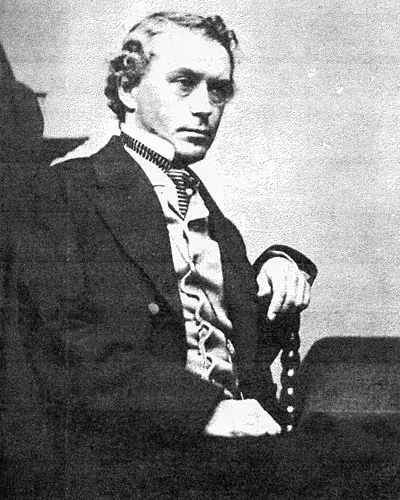
George Templeton Strong was an American lawyer, musician and diarist. His 2,250-page diary, discovered in the 1930s, provides a striking personal account of life in the 19th century, especially during the events of the American Civil War. It covers 1835 to 1875. The historian Paula Baker described him as "perhaps the northern equivalent of South Carolina's Mary Chesnut: quotable, opinionated, and a careful follower of events." He was a well-placed civic leader who was very well known in New York City. He served with distinction on the United States Sanitary Commission during the Civil War. But he never occupied top positions and had no special influence.
