Upton Sinclair Quotes
I know you are brave and unselfish people, making sacrifices for a great principle but I cannot join you. I believe in the present effort which the allies are making to suppress German militarism. I would approve of America going to their assistance. I would enlist to that end, if ever there be a situation where I believe I could do more with my hands than I could with my pen.
While a pacifist in inclination, Sinclair believed in fighting just and necessary war. Note how civil he was with an organization with whom he did not agree.
Upton Sinclair, 1878-1968, Novelist and candidate for California governor (Democrat and Socialist), Letter to the "Anti-Enlistment League", September 20, 1915
Sourced by: Eigen's Political and Historical Quotations

The Times regretted that the Germans did not speak to the Austrians more vigorously when they were threatening to attack Serbia who harbored anti-Austro-Hungarian terrorists (see {642085}). What the Times editors did not realize was that the Germans had already made their war plans (see {642092}) and the Serbian issue was just the justification they needed to implement them. So there was no real reason for the Germans to discourage the Austro-Hungarian Empire from its mission to punish Serbia.


Debs was jailed for sedition for this speech.


For a man of God, Davies was a military hawk of his day. See {599233} .

The American Army had just liberated Bellau Wood, but had lost almost 8,000 men.

The Congress had applauded his message vigorously.

His wife also had a Doctorate in Chemistry—the 2nd woman to achieve that in Germany—and she was distraught that he had been the leading scientist developing not only the poison gas which the Germans introduced in WWI, but he also developed the tactics of use and personally went to the battlefield and supervised the first major gas attacks. This was much against the ethical value of most scientists and Jewish ethics in particular. Haber had been a close colleague of Albert Einstein and the Kaiser Wilhelm Institute, and while Einstein was trying to get scientists to sign a petition against the war, Haber was developing the first weapon of mass destruction. After Haber gave this response to his wife, we left to go to the front to supervise another major gas attack. His wife committed suicide. Haber, while a German national hero to militaristic Germany, never again had the kind of pre-war relationship that existed with Einstein and many other fellow scientists.

Germany had just attacked Russia with whom it had a treaty. For a while, Hitler paid little attention to Italy and just gave their “ally” orders and instructions. Italian public opinion was concerned about the same question. See {627973} .

German ally, the Austro-Hungarian Empire had declared war on Serbia. See {642085}. The Russian Czar was under great pressure because a large Roman Catholic Empire was warring against a small Orthodox co-religionist of Russia and Russians of all classes wanted Russia to defend Serbia. The Czar was making a good faith effort to stave off the war. What he did not realize was that Germany had actually planned for war against Russia and France and was using the alliance with Austria as an excuse.

This referred to ships being torpedoed by the German U-Boats in the poster.

Trumbo was morally opposed to war. He also refused to name Hollywood communists to Congressional Committees during the Red Scare. He was then blacklisted from his occupation, screen writing.


See the American ambassador’s assessment after the war began {41089}


Unlike many socialists who were pacifists and against WWI, Foster and the communists were supporters of the war against fascist Germany, This was one of the reasons that Nazi Germany was virulently anti-communist later.

Eisenhower was then Supreme Allied Commander.


To support the war effort, the most militant suffragettes ceased anti Government militancy. The suffragette movement was split by WWI and the issue of pacifism. See {621266} for the anti-war factional view.
The suffragette movement was split by WWI and the issue of pacicism. See {621265} for the pro war factional view.
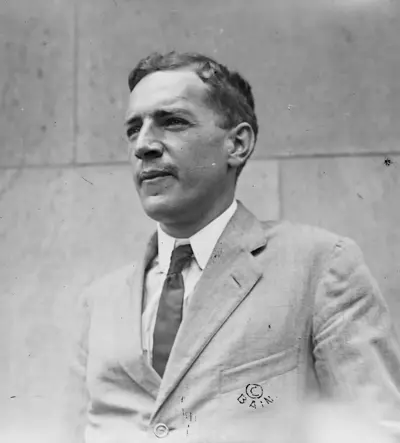
Upton Beall Sinclair Jr. was an American writer, political activist and the 1934 Democratic Party nominee for Governor of California who wrote nearly 100 books and other works in several genres. Sinclair's work was well known and popular in the first half of the 20th century, and he won the Pulitzer Prize for Fiction in 1943.
