London Times Quotes
Europe is to be the scene of the most terrible war she has witnessed since the Fall of the Roman Empire… The blame must fall on Germany. She could have stayed the plague had she chosen to speak in Vienna as she speaks when she is in earnest. She has not chosen to do so.
The Times regretted that the Germans did not speak to the Austrians more vigorously when they were threatening to attack Serbia who harbored anti-Austro-Hungarian terrorists (see {642085}). What the Times editors did not realize was that the Germans had already made their war plans (see {642092}) and the Serbian issue was just the justification they needed to implement them. So there was no real reason for the Germans to discourage the Austro-Hungarian Empire from its mission to punish Serbia.
London Times, Editorial, August 3, 1914
Sourced by: Eigen's Political and Historical Quotations

. We cannot suffer a foreign government to allow plots to our polity to be hatched on its territory!
The assassins and plotters who murdered the Archduke of Austria in Sarajevo were 5 Serbs and a Bosnian. They planned their operation in Serbia. This was the excuse that Austria was giving for going to war with Serbia who had an alliance with Russia.

Moltke’s plan for the Marne Campaign did not work out as planned and he and the Kaiser had a difference of opinion so Moltke was replaced as military commander. This quotation is of critical importance as it shows that the Germans were actually planning the First World War and simply used the assassination of Archduke Ferdinand as an excuse. Thus, the reparations Germany was required to pay when they lost the war. See {642096} for more quotational evidence.

See the American ambassador’s assessment after the war began {41089}

1914 was the outbreak of WWI in which all the belligerents had very different interests and reasons for war—even allies on the same side greatly differed as to their motivation for fighting.


Germany had just attacked Russia with whom it had a treaty. For a while, Hitler paid little attention to Italy and just gave their “ally” orders and instructions. Italian public opinion was concerned about the same question. See {627973} .


1st Viscount Grey of Fallodon. He was advocating British entry into WWI in defense of the Neutrality of Belgium as was their treaty obligation.
1st Viscount Grey of Fallodon. The pace of change in the world has been accelerating ever since the enlightenment. Even at the beginning of the 20th century to was making politics difficult and be the end of the century the pace of change was many times faster.


The Hapsburgs were the ruling family of the Austrian Empire who wanted to invade Serbia in retaliation for their complicity in the assassination of the Austrian Archduke. This would likely bring Russia in the war in support of Serbia. The editor thought that there was no obligation to support Austria when they were planning a war of choice. What the editor did not know was that the German leadership very much wanted war at the time and supporting Austria was the perfect excuse to fight without them starting the conflict. However, the evidence became clear later than it was German aggression that turned the dispute into a World War.

But that is exactly what they did and the First World War was on. Europeans and Americans have often underestimated the political force of the common membership in the Orthodox Church.


stating that war was obsolete See {640087} for the quotation of exactly what Angell wrote.

German ally, the Austro-Hungarian Empire had declared war on Serbia. See {642085}. The Russian Czar was under great pressure because a large Roman Catholic Empire was warring against a small Orthodox co-religionist of Russia and Russians of all classes wanted Russia to defend Serbia. The Czar was making a good faith effort to stave off the war. What he did not realize was that Germany had actually planned for war against Russia and France and was using the alliance with Austria as an excuse.


In both the First and Second World Wars the Western nations had a multilateral defense pact which did little good in the face of German aggression.


While a pacifist in inclination, Sinclair believed in fighting just and necessary war. Note how civil he was with an organization with whom he did not agree.


Honore Gabriel Victor Requiti
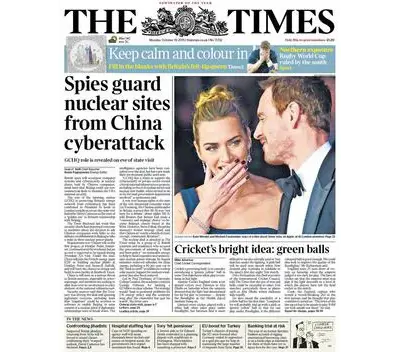
The Times is a British daily national newspaper based in London. It began in 1785 under the title The Daily Universal Register, adopting its current name on 1 January 1788. The Times and its sister paper The Sunday Times (founded in 1821) are published by Times Newspapers, since 1981 a subsidiary of News UK, in turn wholly owned by News Corp. The Times and The Sunday Times, which do not share editorial staff, were founded independently, and have only had common ownership since 1966.
