UPTON SINCLAIR
(Upton Beall Sinclair Jr.)

Sinclair had written The Jungle which was an expose of the meat packing industry which at the time was brutal for the workers and unhealthy and unsanitary for the consumers. The book was exceedingly popular and there were many cries for reform and regulation. Sinclair however was continuing pressuring President Roosevelt who he did not think was acting fast enough. After the telegram, Roosevelt got the first Pure Food & Drug Commission created legislatively.

Referring to Upton Sinclair, the novelist who almost became governor of California in 1934:

Catledge came to California to cover the gubernatorial race between incumbent Republican Governor Merriam and writer Upton Sinclair, an avowed socialist who was running neck and neck. Palmer was then the Political Editor of the Los Angeles Times and his newspaper never covered anything Sinclair did for the campaign and only covered Merriam. Catledge observed that this was not only unfair but poor journalism.

Sinclair was a writer who had written about some of the worst scandals in American politics, leaned toward socialized democracy, and decided to run as a reform candidate in California where he lived. He won the Democratic primary easily even though he had no money, political experience, or backing. He terrified the Republicans who ran one of the dirtiest campaigns in American History to defeat him spending more money than in any election up to then including the Presidential elections. Rogers, who did not usually support individual politicians, made fun of them all, but he thought that Sinclair would be a good political leader. Sinclair lost, but it was close.
Sinclair was a writer who had written about some of the worst scandals in American politics, leaned toward socialized democracy, and decided to run as a reform candidate in California where he lived. He won the Democratic primary easily even though he had no money, political experience, or backing. He terrified the Republicans who ran one of the dirtiest campaigns in American History to defeat him spending more money than in any election up to then including the Presidential elections. Rogers, who did not usually support individual politicians, made fun of them all, but he thought that Sinclair would be a good political leader. Sinclair lost, but it was close.

Teapot Dome was one of the biggest scandals in American History where members of the President’s Cabinet and other politicians were stealing massive amounts of public money. Yet only on Newspaper would write about it until the complete story was known.

Sinclair was a writer who had written about some of the worst scandals in American politics, leaned toward socialized democracy, and decided to run as a reform candidate in California where he lived. He won the Democratic primary easily even though he had no money, political experience, or backing. He terrified the Republicans who ran one of the dirtiest campaigns in American History (see {619613}) to defeat him spending more money than in any election up to then including the Presidential elections. Sinclair lost, but it was close.

Upton Sinclair’s Expose of the Chicago Meatpacking Industry—called “Packingtown” and triggered the government investigation which confirmed almost everything that had been alleged including the mislabeling of products and the use of the meat of diseased animals. As a result, the public pressure was so great that President Theodore Roosevelt was able to institute the first American federal regulation of food.
Sinclair had written an expose of the meat packing industry – the Jungle – which used as its setting the Armour meat packing factory. It changed the way the public thought about the industry, the role of government and regulation. President Roosevelt took up the reform role, and got Congress to Regulate the quality and cleanliness of the meat packing industry. Sinclair, however not only wanted that reform, but also wanted the labor wages and conditions reformed. He referred to the Armour plant as the fortress.
There was no welfare and no Social Security then. Sinclair’s idea and another by a Physician by the name of Townsend (see {36007} ) were the only two ideas in the table about old age pensions. Franklin Delano Roosevelt, noting the appeal of Sinclair and the Townsend plan pushed Social Security shortly thereafter and it became law in 1936. This quotation illustrates that losing candidates and their programs can have a very profound effect on public policy.
This, along with most of Sinclair’s ideas, although called socialist and radical by the conservatives of the time, were adopted later. This illustrates that losing candidates and their programs can have a very profound effect on public policy
The Depression had 25% unemployment and many people lacked even food to eat. Meanwhile, there was a huge amount of unused, idle land in California.
The business and upper class establishment of California was terrified that Sinclair, a socialist, might become governor. They spent more money defeating Sinclair than had been spent in any election before including the Presidency and the record lasted for several more years. In many communities, local authorities would not allow large crowds to assemble to hear Sinclair, and he had been physically threatened many times, Los Angeles was one of the places where the police were trying to intimidate Sinclair and his supporters.
While a pacifist in inclination, Sinclair believed in fighting just and necessary war. Note how civil he was with an organization with whom he did not agree.
The “rebate agony” referred to a corrupt practice of the Railroads and the Large Monopolies. The railroads charged a very high rate for the transportation of important products like beef and oil. However, secretly they gave back a large percentage of the transportation rate charged to the trusts. They in turn could cut their prices and undersell all the smaller competitors who were paying “full freight” and could not afford to match the lower price. As soon as the smaller competitors were driven out of business in an area, the trust raised its rates even higher than they charged originally. The Railroad had made a small but reasonable profit on the freight of the trusts but they were guaranteed all their business. They also made huge profits on the higher rates that the small companies paid until those companies were driven out of business. Journalists like Ray Baker and Ida Tarbell had uncovered the rebate scheme which enabled the trusts to steal high amounts from the general public through unreasonably high prices. President Theodore Roosevelt was committed to try and regulate the railroads and not allow rebates but charge the same public rate to all with no rebates. Socialists like Sinclair, thought that this attempt would be hopeless—that the damage had already been done, and the trusts now had so much money that they could buy state legislatures and many in Congress to preserve their dominance.
This quotation has more than historical interest. The housing fraud technique of 1906 that Sinclair uncovered in his expose were essentially very similar to those that were used in the beginning of the 21st century on a much larger scale that contributed to the Meltdown of 2008, the Great Recession, and the weak housing industry for the next decade. The major difference is that by 2008, the banks and finance industry had developed ways to also get money from the taxpayer for the housing frauds. The expectation that the home buyer would not be able to keep making the mortgage payments was the key in both centuries.
Sinclair was running for the governorship of California and initial polls showed that he was way ahead. Major Conservatives from the country over contributed money to defeat him—more money at the time than had ever been raised even for a Presidential campaign. The Conservatives hired the first political consultants who would advise on an American Campaign throughs a corporation they established Campaigns Inc. The consultants began creating posters and pamphlets many of which were total fabrications attacking Sinclair and then went through his novels that he had written and took quotes from character dialogues in his novels including some of the villain characters who said vile things. They attributed all these terrible quotation to Sinclair, put them into printed pamphlets and distributed them all over the state. Sinclair lost making the assumption that few people would believe the lies that were being issued from Campaign Inc. After that race, political consultants began to work in many campaigns, and with that came more negative campaigning, attacks and more falsehood and lies entered the American political scene.
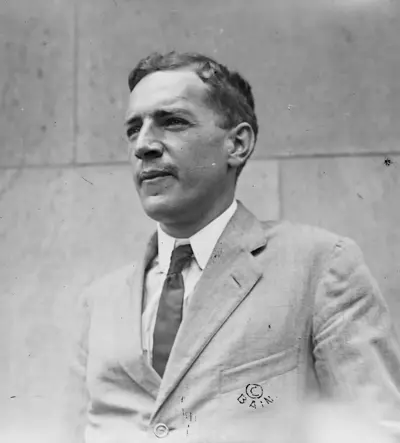
- Born: September 20, 1878
- Died: November 25, 1968
- Nationality: American
- Profession: Author & Political Candidate for California Governor
Upton Beall Sinclair Jr. was an American writer, political activist and the 1934 Democratic Party nominee for Governor of California who wrote nearly 100 books and other works in several genres. Sinclair's work was well known and popular in the first half of the 20th century, and he won the Pulitzer Prize for Fiction in 1943.
