Upton Sinclair Quotes
All day long this man would toil thus, his whole being centered upon the purpose of making twenty-three instead of twenty-two and a half cents an hour; and then his product would be reckoned up by the census taker, and jubilant captains of industry would boast of it in their banquet halls, telling how our workers are nearly twice as efficient as those of any other country. If we are the greatest nation the sun ever shone upon, it would seem to be mainly because we have been able to goad our wage-earners to this pitch of frenzy.
Sinclair, Upton. The Jungle. Doubleday, Page & Company, 1906.

Sinclair had written an expose of the meat packing industry – the Jungle – which used as its setting the Armour meat packing factory. It changed the way the public thought about the industry, the role of government and regulation. President Roosevelt took up the reform role, and got Congress to Regulate the quality and cleanliness of the meat packing industry. Sinclair, however not only wanted that reform, but also wanted the labor wages and conditions reformed. He referred to the Armour plant as the fortress.


The doctrine of the Southern Cotton industry before the Civil War was that Capital should not only use labor and control labor, but that in true capitalism, Capital should own labor—slavery. This Southern hostility towards labor rights and organized labor was derived from this extremist view of capitalism.


Jefferson was one of the first political and economic thinkers to express concern over the “wage slave” concept of the industrial revolution. This was one of the major reasons that he was not in consonance with Alexander Hamilton in his economic vision for America. While we followed the Hamilton direction, there are still issues of maintaining freedom and independence for an employee in modern nations and economies.


This futuristic work attempted to project American life in the year 2000—then 112 years in the future. It is remarkable how many elements he successfully predicted.


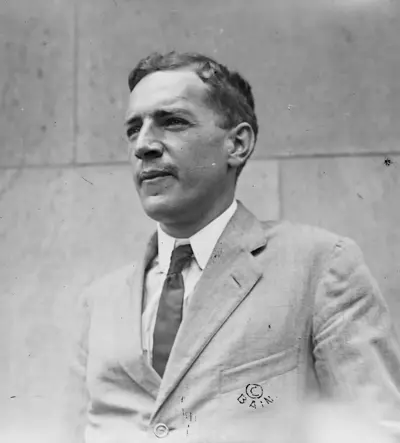
Upton Beall Sinclair Jr. was an American writer, political activist and the 1934 Democratic Party nominee for Governor of California who wrote nearly 100 books and other works in several genres. Sinclair's work was well known and popular in the first half of the 20th century, and he won the Pulitzer Prize for Fiction in 1943.
