Upton Sinclair Quotes
White Collar Workers
Upton Sinclair, 1878-1968, Novelist and candidate for California governor (Democrat and Socialist), Term he coined for office workers Quoted on The History Channel, How the States Got Their Shapes, January 7, 2014
Sourced by: Eigen's Political and Historical Quotations

One of the vestiges of slavery in the South was the negative image that any kind of manual labor had. For whites, that is what slaves did, and for many still “should do”—not whites. For the Blacks, manual labor is what they had been forced and lashed to do, and “slowing down” their productivity was one of the only ways of rebelling. To work hard had been to capitulate to terror and evil. Both races and the economy of the South would suffer for more than a century after the civil war and in some parts of the South the attitudes were reflected into the 21st century.


Samuel Langhorne Clemens, 1835-1910. This quotation had even more meaning a century later when the gap in wages between a knowledge worker and a manual worker had increased many fold.


Although most American slaves were used in agriculture, the myth that Blacks were only fit for manual labor was debunked very early in American history. Despite that , it persisted to some racists to this day. The key then, as today, was education and training.

Her company employed white collar writers, editors, computer programmers and engineers, statisticians, and medical personal who conducted research and training programs for government and private institutions. See {619265} for a concurring view from the nation’s leading productivity expert.


The labor unions and other employee organizations were oriented to the industrial worker originally, and then the teachers and other government employees unions. But the new technology and knowledge workers are not attracted to the same kinds of unions and there is a schism between kinds of workers.

One hundred years later, many in America would come to this same conclusion and American manufacturing, to outcompete China and other Oriental cultures, have turned to highly complex, constantly innovative, and technically advanced processes.


We think of jobs being eliminated when technology is employed as a modern problem. But here, in 1936, automation was eliminating jobs rapidly. One fascinating difference is that Mrs. Roosevelt observes that the laborers jobs are eliminated and the high school and college graduates can run the enterprise. 75 years after this quotation, the jobs of the high school graduates were being eliminated and some higher education was necessary for most jobs. As technology improves, the workers who are necessary require more and more education.

The NAACP official magazine
Today we would include the concept of programming to be included in “handling”.

This was the point of view that was adopted by the Western Allies about the German Nazis and collaborators in the other European nations. However, not everyone agreed at the time with this policy. Lord Russell, the British Nuremburg Prosecutor resigned over this policy. He had case files against over 100,000 Nazi’s who had committed war crimes that he was not allowed to pursue. There was one Western county that did not follow this policy—Norway. They actually tried, convicted and jailed 10 percent of their entire population for collaboration. Their rehabilitation was just fine without the services of these criminals and they became the richest per capita country in the West including the U.S. The issue will be debated by historians of each generation.

This is one of the earliest references to “job sharing”.

The spelling was the original the in legislation passed by the Virginia Assembly Gunsmiths were ery few at the time. The South Carolina Province had only as single gunsmith and he was not very skilled. Planting tobacco was a much more lucrative endeavour, so many of the few gunsmiths abandned that trade for tobacco farming.
Plantng tobacco was a much more lucrative endeavour than fixing guns so many gunsmiths abandned that trade for tobacco farming.
Planting tobacco was a much more lucrative endeavour, so many of the few gunsmiths abandned that trade for tobacco farming.


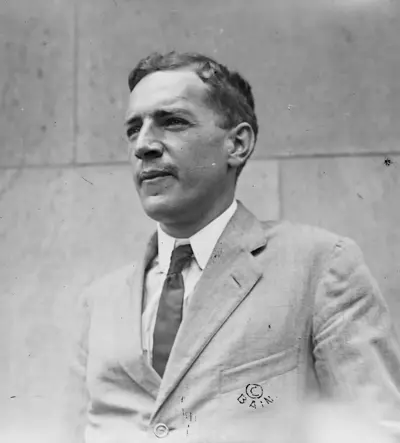
Upton Beall Sinclair Jr. was an American writer, political activist and the 1934 Democratic Party nominee for Governor of California who wrote nearly 100 books and other works in several genres. Sinclair's work was well known and popular in the first half of the 20th century, and he won the Pulitzer Prize for Fiction in 1943.
