Margaret MacMillan Quotes
The Great War was nobody's fault - or everybody's.
MacMillan, Margaret. The War That Ended Peace: The Road to 1914. Random House, 2013.

The Times regretted that the Germans did not speak to the Austrians more vigorously when they were threatening to attack Serbia who harbored anti-Austro-Hungarian terrorists (see {642085}). What the Times editors did not realize was that the Germans had already made their war plans (see {642092}) and the Serbian issue was just the justification they needed to implement them. So there was no real reason for the Germans to discourage the Austro-Hungarian Empire from its mission to punish Serbia.


Although Emperor Hirohito had the status of a God, and his Prime Minister and Chief of the Military testified that they had never disobeyed the Emperor {587278}, there was a thorough attempt to whitewash the Emperor’s role—{587279}. Few Japanese, even years later would suggest that Hirohito might bear some personal responsibility. The Mayor was one of the few who made the statement of the obvious. He received 181 death threats and he was shot shortly thereafter by a right wing supporter of the Emperor’s.


A few months later, that is exactly what Germany did. She was hoping that England would not enter the war despite her treaty obligations, but she was willing to risk the possibility. The Czar had a strong espionage and intelligence service active in Germany, but, like so many other intelligence failures, the intelligence operatives and analysts had military and economic facts but had little understanding of the German culture which propelled Germany to what to most other cultures was “irrational policy making.” People and nations often engage in irrational activities, even against their own self-interest.

stating that war was obsolete See {640087} for the quotation of exactly what Angell wrote.

Peruvian Revolutionary Group. This speech was made from prison.
1914 was the outbreak of WWI in which all the belligerents had very different interests and reasons for war—even allies on the same side greatly differed as to their motivation for fighting.

But that is exactly what they did and the First World War was on. Europeans and Americans have often underestimated the political force of the common membership in the Orthodox Church.


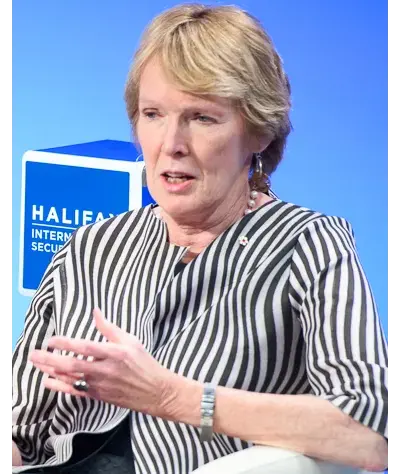
Margaret Olwen MacMillan CC CH is a Canadian historian and professor at the University of Oxford. She is former provost of Trinity College, Toronto, and professor of history at the University of Toronto and previously at Ryerson University. MacMillan is an expert on history and international relations.
