Daniel Patrick Moynihan Quotes
We have to ask if it is once again the summer of 1914. Small acts of terror in the Middle East, in South Asia, could lead to cataclysm as they did in Sarajevo.
Moynihan, Daniel P. Pandaemonium: Ethnicity in International Politics. Oxford University Press, 1993.

stating that war was obsolete See {640087} for the quotation of exactly what Angell wrote.


A few months later, that is exactly what Germany did. She was hoping that England would not enter the war despite her treaty obligations, but she was willing to risk the possibility. The Czar had a strong espionage and intelligence service active in Germany, but, like so many other intelligence failures, the intelligence operatives and analysts had military and economic facts but had little understanding of the German culture which propelled Germany to what to most other cultures was “irrational policy making.” People and nations often engage in irrational activities, even against their own self-interest.


See the American ambassador’s assessment after the war began {41089}


Peruvian Revolutionary Group. This speech was made from prison.


This was very much a minority opinion at the time, and has much historical significance as he was the father of the British Prime Minister, Neville Chamberlain, 1869-1940, whose appeasement of Germany led to Word War II. . See {585941}.


The CIA was supplying planes and pilots to assist anti-Government rebels in their efforts to overthrow Sukarno. Meanwhile, the Secretary of State and other American officials were insisting that America had no involvement in the Indonesian civil war. See {591337}.

The President was also getting ominous news from England. See {41111}


This was the 14th part of the Japanese reply to a previously made American peace proposal. The Japanese policy was to unite all of Asia into a co-prosperity sphere controlled by Japan where Japan would militarily conquer those Asian countries which did not “voluntarily” want to join. The Japanese were in the process of conquering China and the United States and Britain had embargoed oil and other material to Japan trying to pressure them to withdraw their troops from China and cease Japanese conquest by force. Japan believed that it was their right to conquer and control Asia and it was beneficial to the region, and that the U. S. and Britain had no right to curtail the expansion that Japan required to assure raw materials and other necessities. At the very time that these negotiations were on going, the Japanese fleet was sailing for the sneak attack on Pearl Harbor. The attack took place the very day this part of the Japanese reply was received.

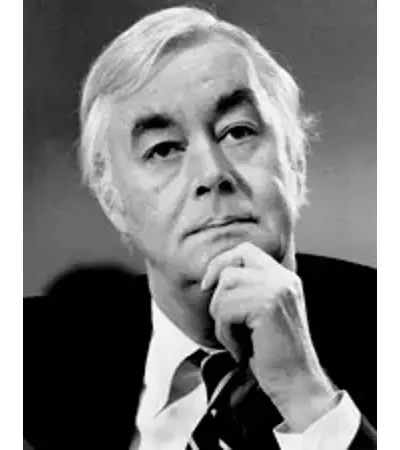
Daniel Patrick "Pat" Moynihan was an American politician, sociologist, and diplomat. A member of the Democratic Party, he represented New York in the United States Senate and served as an adviser to Republican U.S. President Richard Nixon.
