Francis Bertie Quotes
It seems incredible that the Russian Government should plunge Europe into war in order to make themselves the protectors of the Serbians.
But that is exactly what they did and the First World War was on. Europeans and Americans have often underestimated the political force of the common membership in the Orthodox Church.
Francis Bertie, 1844-1919, British Ambassador to France, July 27, 1914
Sourced by: Eigen's Political and Historical Quotations


The Times regretted that the Germans did not speak to the Austrians more vigorously when they were threatening to attack Serbia who harbored anti-Austro-Hungarian terrorists (see {642085}). What the Times editors did not realize was that the Germans had already made their war plans (see {642092}) and the Serbian issue was just the justification they needed to implement them. So there was no real reason for the Germans to discourage the Austro-Hungarian Empire from its mission to punish Serbia.

A few months later, that is exactly what Germany did. She was hoping that England would not enter the war despite her treaty obligations, but she was willing to risk the possibility. The Czar had a strong espionage and intelligence service active in Germany, but, like so many other intelligence failures, the intelligence operatives and analysts had military and economic facts but had little understanding of the German culture which propelled Germany to what to most other cultures was “irrational policy making.” People and nations often engage in irrational activities, even against their own self-interest.

1st Viscount Grey of Fallodon. The pace of change in the world has been accelerating ever since the enlightenment. Even at the beginning of the 20th century to was making politics difficult and be the end of the century the pace of change was many times faster.

Soon thereafter the Spanish American War began and when McKinley favored taking the Philippines from Spain, the New York Sun stated, "We are all jingoes now, and the head jingo is the Hon. William McKinley.


The issue of unilateral or multilateral foreign policy efforts faced America after WWII.

This was very much a minority opinion at the time, and has much historical significance as he was the father of the British Prime Minister, Neville Chamberlain, 1869-1940, whose appeasement of Germany led to Word War II. . See {585941}.


During the Cold War and afterwards many Americans attributed the problems we were having with the Soviet Union emenated from the fact that they were Communists, and our focus was anti-communism. Kennen, however argued that it was not Communism that was the cause of the Aggression of the Soviet Union. It was an extension of the Russian Culture. After the Soviet Union collapsed, and Communism was rejected by the Russians, we still had a great deal of Russian aggression and Foreign Policy problems with Russia. Kennan was right. It was the Russian culture, history, values and traditions that were the primary cause of most of the problems with Russia.

Referring to the proposal to Annex Hawaii in 1887:

See the American ambassador’s assessment after the war began {41089}


The neocons tend to believe that if we can invade a dictatorial country and depose the tyrant, the people could then establish a democracy and that in turn will stimulate neighbors to overthrow their tyrannical rulers and also establish a democracy. The difficulty with that theory as was shown in Iraq, one of their instigated invasion, is that while there are always a small minority of the people who share Western views on Democracy and human rights, most of the people do not. Theocrats, fanatics, fascists, ultranationalists, all strive to shape the society to their view (and settle old scores) and the result is either gridlock or Civil Wars, The societies do not have the institutions to support a democratic society and we do not have sufficient nation building skills, to make up for the shortcomings.


The then Attorney General had established a back channel to the Russian agent. There was genuine fear by the Russians and some in America that there were still many Nazis and German nationalists who would try and influence, if not take over, German politics to produce another aggressive German fascist state. The Russians had lost 22 million citizens to the Germans in the war and had faced a defeated Germany where virtually every German over the age of 30 had been cheering for and supporting Hitler a decade ago. Neither the Russians nor we and the other allies had not yet seen the remarkable turn-around that the German nation would make and the intense anti-fascist, non-military ethos that would be brought by the younger German generations. The direction of Germany was then very unpredictable.


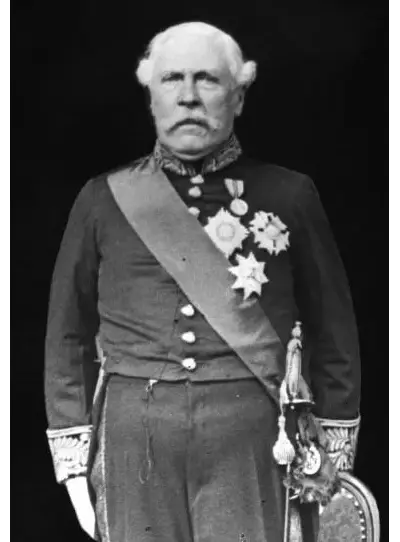
Francis Leveson Bertie, 1st Viscount Bertie of Thame, GCB, GCMG, GCVO, PC was a British diplomat. He was Ambassador to Italy between 1903 and 1905 and Ambassador to France between 1905 and 1918.
