George F. Kennan Quotes
It is clearly unwise for us to continue the attempt to carry alone, or largely single-handed, the opposition to Soviet expansion. It is urgently necessary for us to restore something of the balance of power in Europe and Asia by strengthening local forces of independence and by getting them to assume part of our burden.
The issue of unilateral or multilateral foreign policy efforts faced America after WWII.
George F. Kennan, 1904-2005, Historian & U.S. Ambassador to Russia and Yugoslavia, Secret State Department Report, November 6, 1947, Foreign Relations of the United States: 1947
Sourced by: Eigen's Political and Historical Quotations


Ironically, at the time she wrote this column, Mrs. Roosevelt was being accused of being a communist by some Southerners who associated her strong views against racism and segregation. Some in the North thought she was a communist because of her active role in the New Deal, Yet here she was, willing to use military force to prevent Soviet expansion.

After the economic & power collapse of the Soviet Union, the United States was the only remaining superpower. Givern Russia's diminshed capability and many Americans still carrying resentments about the Cold War, America's foreign policy and diplomacy did not treat Russia as if they were a very important power in the world. Puten greatly resented the fact that Russia was no longer considered or treated like a world power, Russia had a nuclear arsenal and a total delivery system what was in the same destructive potential class as the United States. There were many Russiabs who had similar resentments and Putin sert out to adopt policieis and practices that would force the United States and the other nations to consider them with more dignity, respect and consdideration. This was a typical statement of the period when he was "stoking the fires of Russian resentment.


Shortly thereafter the United States joined the allies and the First World War.

This resolution was bad enough for its overt racism. Ironically, the major victims of Japanese aggression have been Asians—China, Korea, Manchuria, and others. “White” empires had economic interests in throughout Asia and this was what Britten and many others were concerned with protecting. This quotation is important for another reason. At the very moment Britton introduced the resolution, Charles Evans Hughes our Secretary of State was welcoming a new, very high level ambassador to Washington. The administration had decided on a negotiating initiative and Britton and other Congressmen cut the legs out from under the administrations diplomatic efforts. It was particularly bad because one of the Japanese complaints about America and other white nations was their racism and discrimination against Asians. Congress undermining Administration diplomatic efforts has an all too frequent history in America.


In both the First and Second World Wars the Western nations had a multilateral defense pact which did little good in the face of German aggression.


He was discussing the conflict in the Ukraine between keeping their historical economic relationships with Russia and being more involved with Europe and the West. He observed that the Ukraine has been for centuries not only and integral part of Russia but played a huge role in the Russian Revolution of 1917. Kissinger urged Ukraine independence and relations with both Russia and Europe and not making the Russians feel that they have little or no influence over what was not very long ago a critical part of their country.

This is the kind of threat that was used by Germany before the First World War. It worked with Turkey, but King Albert realized that being an “ally” of Germany meant losing independence anyway. Belgium would not join Germany, so the Germans invaded Belgium in 1914. Belgians fought with the allies and at the end of WWI, they were able to rebuild their independent state and thrive until they were again invaded by Germany in WWII. Turkey, in contrast, lost their entire empire, as a result of their fighting as German allies in WWI.

During the Cold War and afterwards many Americans attributed the problems we were having with the Soviet Union emenated from the fact that they were Communists, and our focus was anti-communism. Kennen, however argued that it was not Communism that was the cause of the Aggression of the Soviet Union. It was an extension of the Russian Culture. After the Soviet Union collapsed, and Communism was rejected by the Russians, we still had a great deal of Russian aggression and Foreign Policy problems with Russia. Kennan was right. It was the Russian culture, history, values and traditions that were the primary cause of most of the problems with Russia.


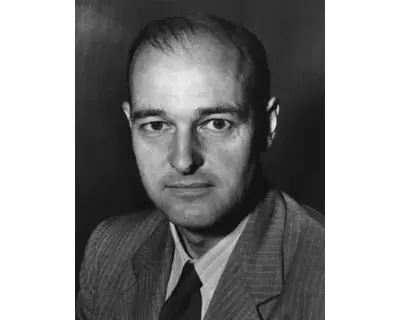
George Frost Kennan was an American diplomat and historian. He was best known as an advocate of a policy of containment of Soviet expansion during the Cold War. He lectured widely and wrote scholarly histories of the relations between the USSR and the United States. He was also one of the group of foreign policy elders known as "The Wise Men".
