Roger Kimball Quotes
Containment was merely appeasement on the installment plan.
Roger Kimball, Political Historian, “The Power of James Burnham,” The New Criterion, September 2002
Sourced by: Eigen's Political and Historical Quotations


The memorandum articulating the new proposed policy is referred to as “the containment memo.”


This editorial marked what most people agreed was the end of the Cold War.


He was right. Before WWII Russia was not considered a very important country in the world, but having emerged from WWII, Russia was stronger than ever and counties like Germany and Italy were in ruins.


At the time, the Red Scare was prevalent and many Americans were terrified of communists. It was a very effective political tactic to imply that an opponent was a communist or communist sympathizer. For another harsh smear of Stevenson, see {619523}.

In 1992 Russia was in terrible economic shape after the fall of the Soviet Union. Keeping up with the United States military expenditures had bankrupted the Russians. The United States which had strategically increased its defense spending to break the Russian economy if they tried to keep up. However, the U. S. expenditures had forced America into a deficit spending period which produced a national deficit greater than all the previous cumulative deficits in our history. So the American economy was not in great shape either. Meanwhile, Japan, whose constitution (imposed by America after WWII) forbade having a military and funding a military. The result was the Japanese economy was growing at a much more rapid rate, and did not have the unbalanced budget of the United States and Russia. Hence, Tsongas’ observation.

Ironically, at the time she wrote this column, Mrs. Roosevelt was being accused of being a communist by some Southerners who associated her strong views against racism and segregation. Some in the North thought she was a communist because of her active role in the New Deal, Yet here she was, willing to use military force to prevent Soviet expansion.

During the Cold War and afterwards many Americans attributed the problems we were having with the Soviet Union emenated from the fact that they were Communists, and our focus was anti-communism. Kennen, however argued that it was not Communism that was the cause of the Aggression of the Soviet Union. It was an extension of the Russian Culture. After the Soviet Union collapsed, and Communism was rejected by the Russians, we still had a great deal of Russian aggression and Foreign Policy problems with Russia. Kennan was right. It was the Russian culture, history, values and traditions that were the primary cause of most of the problems with Russia.
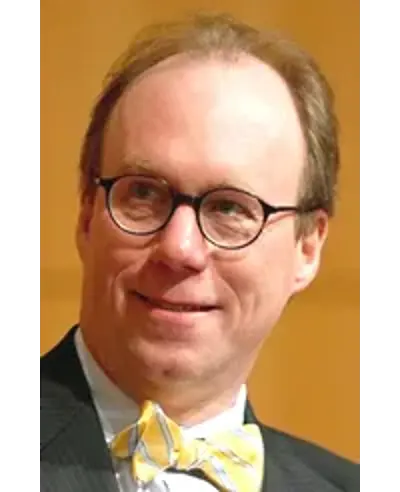
Roger Kimball (born 1953) is an American art critic and conservative social commentator. He is the editor and publisher of The New Criterion and the publisher of Encounter Books. Kimball first gained notice in the early 1990s with the publication of his book Tenured Radicals: How Politics Has Corrupted Higher Education. He currently serves on the board of the Manhattan Institute, and as a Visitor of Ralston College, a start-up liberal arts college based in Savannah, Georgia. He is Chairman of the William F. Buckley, Jr. Program at Yale and has also served on the Board of Visitors of St. John's College (Annapolis and Santa Fe) and the board of Transaction Publishers. On May 7, 2019, he was awarded the Bradley Prize in Washington, D.C. On September 12, 2019, he was awarded the Thomas L. Phillips Career Achievement Award from The Fund for American Studies.
