Harry Graf Kessler Quotes
To-day the Peace Treaty was ratified at Paris; the War is over. A terrible era begins for Europe, like the gathering of clouds before a storm, and it will end in an explosion probably more terrible than that of the World War. In Germany there are all the signs of a continuing growth of nationalism.
Harry Kessler, 1868-1937, French-born Intellectual, German Military Officer, Diary, January 10, 1920
Sourced by: Eigen's Political and Historical Quotations

The Ambassador of Bavaria represented an area where the politicians saw democrats and socialists as their great enemy, as did many of the leading right wing conservatives in all of Germany. They believed that a great war would give them a chance to crush democratic socialism in Europe. Bethmann warned that just the opposite might result, and indeed it did. He was correct. Many of the crowned heads of Europe were deposed and the democratic socialists emerged as a major political factor in the victorious democracies. Bethmann-Hollweg, however, was not a strong leader and could not prevent the Conservatives, the military leaders, and Kaiser Wilhelm from initiating WWI.


Leval was an appeaser and a collaborator with the Nazi’s. He led the government in name but the Germans really controlled the country. His actions killed tens of thousands of French men and women by turning them over to the Germans. After the Germans were defeated in WWII, Leval was shot as a traitor by the Free French forces.

The Times regretted that the Germans did not speak to the Austrians more vigorously when they were threatening to attack Serbia who harbored anti-Austro-Hungarian terrorists (see {642085}). What the Times editors did not realize was that the Germans had already made their war plans (see {642092}) and the Serbian issue was just the justification they needed to implement them. So there was no real reason for the Germans to discourage the Austro-Hungarian Empire from its mission to punish Serbia.

The Romanovs were the family of the Russian Czars while the Hapsburgs were the family names of the Emperors of Austria. The Austrian Army Chief of Staff hated the Russians and was constantly urging war against Czarist Russia. The archduke, the heir to the Austrian throne, was constantly arguing against attacking Russia. When Franz Ferdinand was assassinated, it triggered WWI. He was no longer able to have a voice against war, and Austria and Russia were soon at war. At the end of WWI, the Austrian Empire—an ally of Germany was broken up and the Russian Revolution ended the Romanov dynasty. The Archduke was absolutely right.

1st Earl Lloyd-George of Dwyfor. For the earliest use of the phrase, see {41309}.

Nazi Germany was overrunning Europe and WWII was well under way in Europe.

One of the predictions of the oncoming war with Germany.

He was exactly right. Two decades later Germany had started WWII.

His appeal was also in the name of concurring heads of state of Finland, Holland, Denmark, Norway, Luxemburg, and Sweden.

The “Great War” was a term then used for the First World War. He actually understated the effect on the generations. It affected more than two.


stating that war was obsolete See {640087} for the quotation of exactly what Angell wrote.

since the end of WWI The railroads were nationalized for WWI and he ran them all as a government official

Unfortunately, the prime minister turned out to be very accurate in his predictions. The Second World War functioned just as he said.

See the American ambassador’s assessment after the war began {41089}

1st Viscount Grey of Fallodon. He was advocating British entry into WWI in defense of the Neutrality of Belgium as was their treaty obligation.
The War Plan that the Germans had developed--{642092}—had gone awry at the battle of the Marne in late 1914.


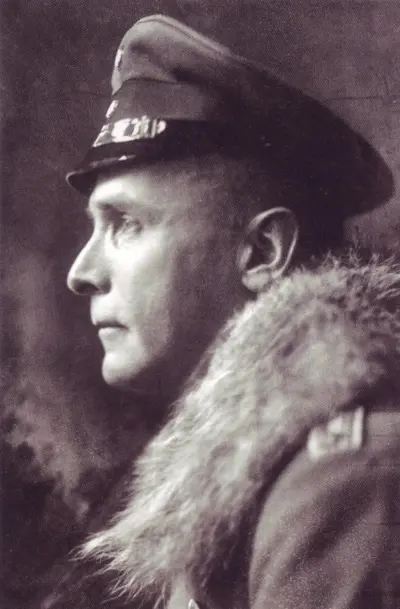
Harry Clemens Ulrich Graf von Kessler was an Anglo-German count, diplomat, writer, and patron of modern art. English translations of his diaries "Journey to the Abyss" (2011) and "Berlin in Lights" (1971) reveal anecdotes and details of artistic, theatrical, and political life in Europe, mostly in Germany, from the late 19th century through the collapse of Germany at the end of World War I until his death in Lyon in 1937.
