Woodrow Wilson Quotes
My message was one of death for young men. How odd it is to applaud that.
The Congress had applauded his message vigorously.
Woodrow Wilson, 1856-1924, 28th President of the United States (Democrat, NJ), Statement upon his return to the White House after delivering a message to Congress asking for a Declaration of War against Germany, April 1917, Quoted in Clifton Daniel, The 20th Century Day by Day
Sourced by: Eigen's Political and Historical Quotations


The only soldier ever so honored


The “old” writing to which he was referring was a quotation from Roman Poet Horace. See {589060}.


Drumbo was morally opposed to war. He also refused to name Hollywood communists to Congressional Committees during the Red Scare. He was then blacklisted from his occupation, screen writing.


This would be like an American President firing the congressional chaplains. However this is only one small, but telling, example of Atatuk’s secularization of the nation which had a great deal to do with Turkey becoming a modern great power—by far the strongest and most developed of the Islamic world.
This Quotation is inscribed on the Atatürk Memorial in Turakena Bay, Gallipoli and at the Kemal Atatürk Memorial, Canberra, Australia. Most of the Allied casualties at Gallipoli were Australians. Few nations have memorialized enemy troops with the same dignity and respect as their own dead heroes as Ataturk did—another unusual action of this great statesman.

Churchill saw before many others that technology and weaponry had changed the nature of warfare. At the time the military leadership of all the major powers were pursuing 19th century tactics with 20th century weaponry including mass bayonet charges against machine guns behind barbed wire. Churchill and other civilians, although they had legal control over the military, had little de facto tactical control. As a politician he became an itinerant meddler in military tactics thereafter.


It was then customary to return with the head of a killed Samurai which would be made up as if in life so the dead man could be recognized. That way, the victor received more recognition with the importance of the Samurai who he defeated.


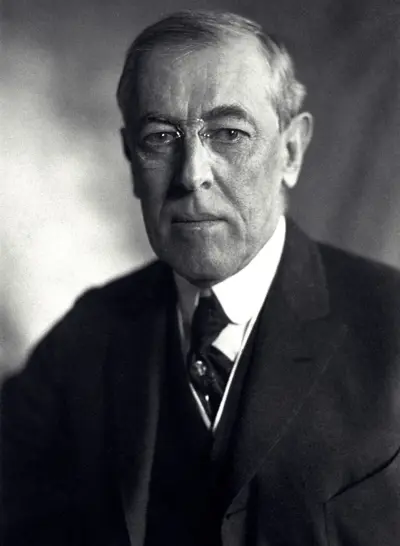
Thomas Woodrow Wilson was an American politician and academic who served as the 28th president of the United States from 1913 to 1921. A member of the Democratic Party, Wilson served as the president of Princeton University and as the 34th governor of New Jersey before winning the 1912 presidential election. As President, Wilson led the United States into World War I in 1917. He was the leading architect of the League of Nations, and his progressive stance on foreign policy came to be known as Wilsonianism. Scholars have generally ranked Wilson in the upper tier of U.S presidents, although he has been criticized for supporting racial segregation and white supremacy.
