George S. Patton Quotes
It is a sacred duty to see that each of our dead comrades is escorted through the pearly gates by a large, a very large number of enemy dead. It is up to us now and here after to produce these escorts for the heroic slain.
George S. Patton, 1885-1945, U.S. Army General, Speech to a troops, August 1943
Sourced by: Eigen's Political and Historical Quotations


At Tippecanoe, General Harrison defeated the Indians but suffered over 60 of his men killed and many more wounded. Newly supplied modern English weapons were found on captured Indians. There was a call for war with England:

This would be like an American President firing the congressional chaplains. However this is only one small, but telling, example of Atatuk’s secularization of the nation which had a great deal to do with Turkey becoming a modern great power—by far the strongest and most developed of the Islamic world.


The first two lines of the song became the slogan a few years later of veterans of the Normandy invasion of WWII.

The Congress had applauded his message vigorously.


Drumbo was morally opposed to war. He also refused to name Hollywood communists to Congressional Committees during the Red Scare. He was then blacklisted from his occupation, screen writing.

Dole, was seriously wounded in WWII and lost the use of one arm.


It was then customary to return with the head of a killed Samurai which would be made up as if in life so the dead man could be recognized. That way, the victor received more recognition with the importance of the Samurai who he defeated.


It is hard to believe that there are any people in the world that would try and educate youth in this manner, but it is common amongst the ultra fundamentalist Muslims to day. However, it is very similar to what the Christians, including the Pope, preached a millennium ago and what the Japanese preached to their young Kamakasi in WWII.


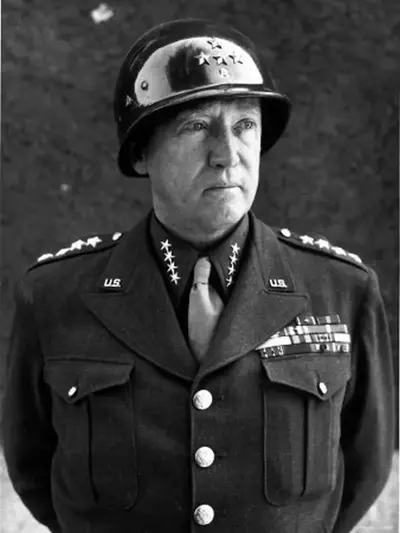
George Smith Patton Jr. was a general in the United States Army who commanded the Seventh United States Army in the Mediterranean theater of World War II, and the Third United States Army in France and Germany after the Allied invasion of Normandy in June 1944.
