George Templeton Strong Quotes
There is an uneasy feeling about the conduct of the war. That fatal Merrimac is ready for sea again. With a little luck to help her, she may do infinite mischief. Is Congress or the Navy Department accountable for our want of preparation? Somebody ought to be hanged, because we have not six Merrimacs now in commission.
He was not aware of it but the Union War Department had prepared well and additional ironclad ships under construction of which the Monitor was just the first. Lincoln had approved the construction of ironclads on October 4, 1861. The Confederate Merrimack was larger and to the layman was the stronger ship but the Monitor did some damage and drove the Confederate Merrimac from the field to make repairs. The Confederacy, with minimal industrial steel-making capacity could not produce enough steel to protect more ships than the one ironclad Merrimack. The Union Navy, not only were building more Monitor class ships, but also, had a few Merrimack type wooden ships being iron clad as well as their Monitors as Strong had called for. The Union soon totally dominated the seas and as important, the rivers with which they could supply Union troops and bombard Confederate cities built thereupon.
George Templeton Strong, 1820-1875, New York Sanitary Commission, Diary, March 28, 1862
Sourced by: Eigen's Political and Historical Quotations

As in modern times the Navy encouraged the media and leading writers to promote their latest weaponry. Hawthorne however shortly after the Monitor and the Merrimac battle saw the future in terms even more dramatic than most of the military.
This quotation not only gives us an interesting description and reaction to the first generation of ironclad ships, but we get an insight into the amazingly open access that was available to the most important new weapon of the Union. Apparently, there was still hope of a Southern cessation of fighting and rejoining the Union, and the aim was to get as much publicity about the new weapon as possible to the Confederates to persuade them of the futility of their situation. The North could manufacture as many of these vessels as they needed, while Confederates could only refit wooden ships with metal siding. There were few ships that were suitable for such refitting and the ironworks of the South were limited and needed for cannon, railroad tracks and other uses all competing for limited production capacity. Hawthorne went on board the Monitor without making any special arrangements at all. He just showed up and went aboard.

Dreadnoughts were huge battleships. Britain had the dominant navy of the world and controlled the seas. A European war would be a land war where a navy would be of little use. Hence, Britain would not want to get involved in such a war where she could not use her greatest military strength. He was wrong about this and so much else. Britain entered WWI when Germany invaded Belgium fulfilling her treaty obligations. The Germans intelligence operators and analysts were well aware of the treaty obligations, but had little understanding of English culture and tradition. The German aggression against a small power like Belgium was morally offensive to many in Great Britain, and Britain had a tradition of fighting for moral principles. The Germans would never militarily disadvantage themselves for the sake of a treaty obligation to a small nation, and they did not believe that the British would be so different and fulfill their treaty obligations even though their strongest military asset—their navy would not be very helpful.


He later provided a copy to Hezekiah Niles, February 5, 1819 which is the source of the quotation since Henry never mentioned it.

Political disputes over the degree of defense spending are classic in American political history. In the early 20th century, most conservatives were opposed to government spending for the military and the President had great difficulty getting the Conservative wing of his own party to support increased military appropriations. The remains of the great naval hero John Paul Jones had just been brought to the United States from France in which he had died. A large ceremony was held in Annapolis, Maryland and most of the conservatives who had opposed the military spending proposed by Roosevelt attended the ceremony to demonstrate their patriotism. TR shocked them by turning the solemn ceremony into a political embarrassment for them.


There were few military thinkers at that time who would agree with Goebbels on this point.


Essentially similar ideas were expressed earlier by George Washington and in antiquity by Vegetius and Horace.


In 1930, Japan, Britain, and the United States had signed an agreement that submarines would not sink merchant vessels without having first placed passengers and crew in a place of safety. However, when Japan attacked Pearl Harbor and bombed civilians as well as military and had a pattern of bombing and shelling civilians in China, the U. S. took the position that Japan had abrogated all treaties and therefore abrogated the 1930 treaty. It was more of a symbolic gesture as at the time the American forces were in no shape to attack Japanese merchant shipping though later in the war, it became material. By that time, the Japanese had murdered American prisoners of war on the Bataan Death March and elsewhere and had slaughtered civilians in the Philippines and all the other territories that they invaded. The niceties of the 1930 treaty was one of the first casualties of Japanese aggression.


The Germans did not believe the British would send land troops. See {642105}.
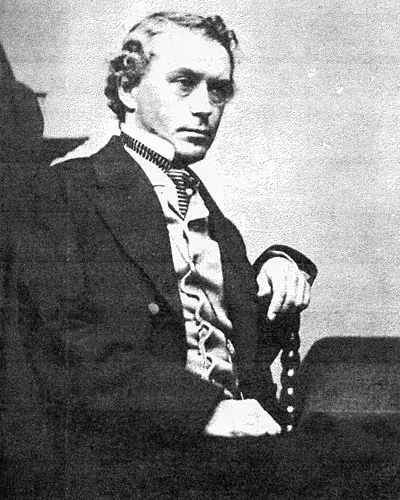
George Templeton Strong was an American lawyer, musician and diarist. His 2,250-page diary, discovered in the 1930s, provides a striking personal account of life in the 19th century, especially during the events of the American Civil War. It covers 1835 to 1875. The historian Paula Baker described him as "perhaps the northern equivalent of South Carolina's Mary Chesnut: quotable, opinionated, and a careful follower of events." He was a well-placed civic leader who was very well known in New York City. He served with distinction on the United States Sanitary Commission during the Civil War. But he never occupied top positions and had no special influence.
