Thomas Dale Quotes
Terrour ... makes short warres
Thomas Dale, Deputy English Governor of Virginia, English Naval Commander, Quoted in George Percy, A True Relation, 1612, [The terrorist attack on the World Trade Center of September 11 was not the first introduction to of terrorism in America. That probably belongs to Dale who developed the technique of attacking Indian villages, whether hostile or not, and totally burning them to the ground and taking all their crops or burning what they could not carry. Surviving Indians who escaped into the forest had nothing to return to and had to go to other distant tribes and bands for survival. This it was the first major American “ethnic cleansing.”
Sourced by: Eigen's Political and Historical Quotations

Most of the Iroquois, under the influence of Joseph Bryant, thought that the English would be the winner in the American Revolution. With the exception of the Huron Tribe, the Iroquois sided with the English. Washington developed a policy of what we call today “ethnic cleansing” and successfully chased the other 5 Iroquois tribes out of their traditional lands and to safety in Canada where their descendents still live.


It was speeches like this which created a distrust of the Palestinian intentions when there were negotiations of land for peace. Worry that peace was just a pretext for war or takeover, inhibited many Israelis from wanting to give up anything unless they could get a more reliable partner. The Palestinians had a traditional fertility rate that was several times that of the Israelis.


At the time the President denied that he had decided to invade Iraq. Skelton saw the “handwriting on the world.”

1st Earl Lloyd-George of Dwyfor

His hubris soon backfired as the Indians learned how to tactically cope with firearms. For example they soon learned that they would see the flash of the musket before the ball would discharge, so would lie down and the bullets would pass overhead. The muskets were effective as defensive weapons from behind barricades though not very accurate. Swords and pikes turned out to be more effective in most cases.


The meaning is that to be victorious in war one should not be inhibited from doing cruel and brutal things that war sometimes necessitates.

See {613496} for the origin of the “thrashing a cannibal” phrase.


Ruling group of France during the French Revolution. The purchase and transportation of an army in the field was a very expensive element of war and was very difficult as well. The Directory urged its generals to live off the land and get their food from the enemy country they were invading. Rarely did they pay for it but typically just took it from the civilians. Napoleon who served under the directory took this principle one step further. He also stole the invaded country’s art—paintings and statues mostly. These he sent back to Paris where they were sold to rich people. This way he could pay the salaries of the troops and buy more weapons and ammunition. Napoleon could conquer so much territory because France did not have to pay for the military effort as other countries did. This is one of the major reasons for example that the Louvre Museum in Paris has so many great Italian and Spanish paintings.

A part of this quotation is very often taken out of context by just quoting the phrase “prosecution of an exterminating war” implying that Lamar was urging genocide. However, the war was urged only if the Indians did not cease their raids and massacres. Further, he specifically excludes women and children from the “extinction”. In addition he holds out the option of forced “total expulsion” if the raids continue. Brutal his threats were. And given that the whites were taking the Indians traditional lands it is easy to see where there were reasons for Indian resistance to white expansion. However, there was another reason that Lamar and most of the white settlers wanted the Indians expelled: They wanted the land.


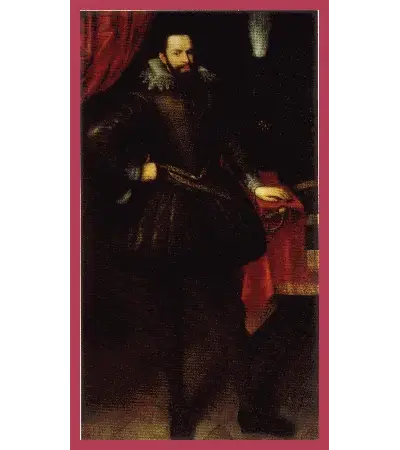
Sir Thomas Dale was an English naval commander and deputy-governor of the Virginia Colony in 1611 and from 1614 to 1616. Governor Dale is best remembered for the energy and the extreme rigour of his administration in Virginia, which established order and in various ways seems to have benefited the colony, although he was criticised for high-handedness. He is also credited with the establishment of Bermuda Hundred, Bermuda Cittie, and the Cittie of Henricus.
