Thomas Jesup Quotes
The country can be rid of them only by exterminating them. [The Seminole Indians]
He was a brutal officer who by modern standards committed various war crimes.
Thomas Jesup Quoted in Roxanne Dunbar-Ortiz, Indigenous Peoples History
Sourced by: Eigen's Political and Historical Quotations

During the Seminole War, Ross, as a very respected Cherokee Chief and leader, had been asked to persuade some if the Seminole Chief’s to come to a conference to discuss and negotiate a settlement to the conflict. Ross was successful . Seminole Chief Micanopy, twelve other chieftains, and a number of Seminole warriors accompanied the Cherokee deputation to the headquarters of the United States Army at Fort Mellon, where they were to discuss the matter. When they arrived General Thomas Jesup arrested the Seminoles instead of negotiating. Ross, a very educated man who was literate in English, o the Secretary of War. Jesup in retrospect was one of the disgraces in the history of the U. S. Army was admired, not for his fighting or his lack of ethics, but for his management and logistics as the Quartermaster General. For more quotations showing Jesup’s character, see quotations 643611 and 643612.

The Seminole Wars were one of the low points in American military behavior. With the specific permission of Commanding General Jesup, the soldiers were to loot the homes and personal possessions of the enemy civilians as well as fighters, but he favored extermination and there were many atrocities. He even seized the Seminole Leaders who had been invited for Peace Talks.

Self Given Title. The governor distinguished between friendly Indians from others to the consternation of Bacon and his followers.

Clark’s men had English Colonel Hamilton under siege by making him think there were many more Americans in Clarks army than the real 180 or so. He tried to get Hamilton to surrender by threatening if they had to take the fort they would treat Hamilton and the British as murderers—Hamilton had paid hostile Indians for American scalps. At that point a party of Clark’s men arrived with 4 or 5 Indian prisoners who had been captured raiding
civilian farms. After the Indians were executed, Hamilton agreed to surrender.
While this is a classic quotation demonstrating the intentional use of germ warfare in early America, biochemical warfare had existed long before ranging from the poisoning of wells in Biblical times to the hurling of diseased animal and human body parts in and out of besieged cities with catapults.


The first Native American to become a General Officer. Appointed by President Grant in 1869
One of the most murderous struggles in history was when Turkey was fighting Armenia. The peoples had, and still do have, a great hatred towards each other. The Turks had a large ethnic Armenian population and the Turkish government decided to “relocate” them. In the process many Armenians were brutally murdered, The Armenians however also butchered Turks whenever they could. The events were so brutal, that neither Turkey or Armenia teach about their own atrocities in their schools, but tell their students of the other’s atrocities. Historial denial governs this conflict and its war crimes.
Published 100 years after it was written. This is the first known written statement of what became a de facto policy regarding the American Indian.


Marquis de Seignelay. At the time, a perfectly acceptable justification for war on a people was that they were interfering in the plan to convert the area to one particular religion, in this case, Catholicism.
Over the years Sherman’s advocacy of Indian extermination went beyond the Sioux to all Indians.


At the time, Jefferson was the Governor of Virginia and the Indians and white settlers in the Western part of the state were coming into increasing conflict. This rather heartless and blood thirsty quotation of Jefferson’s surprises many of his great admirers. Especially because of his historical sophisticated and empathetic way he treated Indians. See {589102}, {589103}, {589113}, {589125}, and {605068}. Jefferson saw Indians much like he saw whites—differentially. Some were friends, some neutral, and some dangerous enemies. His wish to exterminate or ethnically cleanse these Indians was limited to these Indians—not to Indians in general. Nonetheless, it shows a violent side of Jefferson that was in play with enemies. As President, he was aggressive against the Muslim Pirates (see {623707} and {617123}).

Most of the Iroquois, under the influence of Joseph Bryant, thought that the English would be the winner in the American Revolution. With the exception of the Huron Tribe, the Iroquois sided with the English. Washington developed a policy of what we call today “ethnic cleansing” and successfully chased the other 5 Iroquois tribes out of their traditional lands and to safety in Canada where their descendents still live.

Although a very aggressive military commander, Grant did not approve of proposals to have wars of extermination which many called for against different Native American tribes.

A part of this quotation is very often taken out of context by just quoting the phrase “prosecution of an exterminating war” implying that Lamar was urging genocide. However, the war was urged only if the Indians did not cease their raids and massacres. Further, he specifically excludes women and children from the “extinction”. In addition he holds out the option of forced “total expulsion” if the raids continue. Brutal his threats were. And given that the whites were taking the Indians traditional lands it is easy to see where there were reasons for Indian resistance to white expansion. However, there was another reason that Lamar and most of the white settlers wanted the Indians expelled: They wanted the land.

Saloth Sar Pol Pot. He was responsible for the brutal killing of over 1 million of his own people.

He reversed the Spanish policy of keeping guns from the American Indians. He provided arms with the express intention that they destroy each other. This policy almost worked for the Indians of California but several Indian tribes were exterminated.
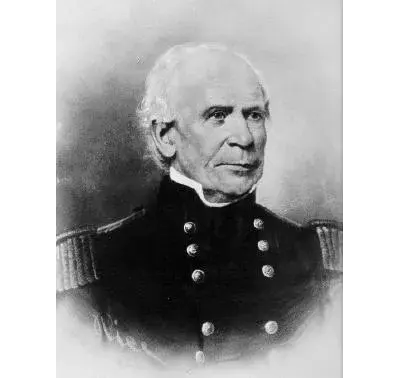
- Born: December 16, 1788
- Died: June 10, 1860
- Nationality: American
- Profession: Military General Officer
Thomas Sidney Jesup was a United States Army officer known as the "Father of the Modern Quartermaster Corps". His 52-year (1808–1860) military career was one of the longest in the history of the United States Army.
