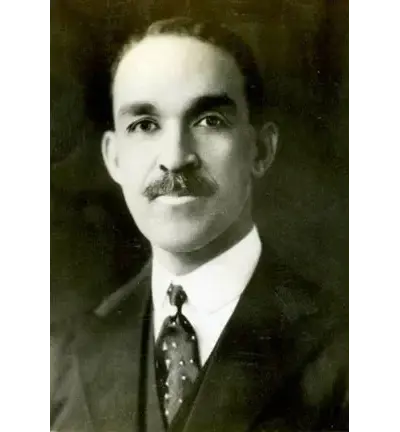
Benjamin Griffith Brawley Quotes
In the course of these contests [the Seminole Wars] the rights of Indian and Negro alike were ruthlessly disregarded. There was redress for neither before the courts, and at the end in dealing with them every honorable principle of men and nations was violated.
The Seminole Wars were one of the low points in American military behavior. With the specific permission of Commanding General Jesup, the soldiers were to loot the homes and personal possessions of the enemy civilians as well as fighters, but he favored extermination and there were many atrocities. He even seized the Seminole Leaders who had been invited for Peace Talks.
Benjamin Griffith Brawley A Social History of the American Negro 1921
Sourced by: Eigen's Political and Historical Quotations
He was a brutal officer who by modern standards committed various war crimes.
This notorious order issued by the General in the Seminole War was a throwback to ore primitive days where armies were allowed to pillage enemy towns and residences and steal whatever they wanted and keep it for themselves or divide it amongst the troops. There was no specific legal authority for this kind if theft, but there was also nothing prohibiting it. It would not be until the Civil War when the United States military would issue a written set of rules of warfare that must be followed by all troops.
Abu Ghraib was the prison in Iraq where prisoners were brutalized and treated illegally and immorally. Seymour Hirsh was the Pulitzer Prize-winning investigative journalist who broke the story. Levy contrasted that where the Algerian War was full of such atrocities but French intellectuals and press would not publicize it. It didn’t stop for the whole war.
Regarding the expose that UN peacekeeping troops were committing sexual atrocities in the Congo. No one was brought to justice or punished.
Turkey, under the control of the triumvirate of the 3 Young Turks had massacred almost all of the Armenian population in the area claimed by Turkey. At the end of WWI, there were many demands that those who ordered the policy of a Turkish genocide and those who carried it out by brought to justice—tried and punished. The Sultan had done little if anything to stop the slaughters although he was very weak, Turkey under the Young Turks had also picked the wrong side and allied with the Germans. The Sultan and his Grand Vizier were trying to pick up the pieces and maintain the Ottoman Empire as best they could despite they the fact that they lost control of much of their vast territory. At the Paris Peace Conference, the Grand Vizier virtually admitted the crimes and committed the Turkish government to determining the guilty and bringing them to justice. He actually had 50 of the worst offenders arrested (See {620595}.). However, there were a few tried and one governor of a province was hanged and a few others received short jail sentences. Talaat, the worst of The Young Turks regarding the genocide, escaped to Germany. But he was tracked by a surviving Armenian who assassinated Talaat. The assassin was acquitted by a sympathetic German court which ruled that the extermination of the assassin’s family had been so traumatic that temporary insanity relieved the assassin of criminal responsibility.
There were actually very few incidents of civilian resistance to the German invaders and occupiers. However, they were exaggerated and used as a pretext for what amounted to atrocities and war crimes against the Belgian Civilians.
Wherever there has been a true free press, there have been anti-war activists who are particularly critical of the affect on civilians—collateral damage or otherwise.
Chelsea Elizabeth Manning
The Greeks committed many atrocities in their war with Turkey. See {584483}
The Indian allies of the French scalped some American colonists which for some whites was akin to the modern reaction to terrorist atrocities. The British and Americans then justified the scalping of their Indian allies as simple retaliation. While Indians had scalped before the whites ever came, the whites accelerated the practice. There was an economic element to scalping. The French “paid” their Indian allies in arms, blankets, trinkets and alcohol by the scalp as it was a crude way of “performance measurement.” Not to be outdone, the English adopted the same custom with the French allied Indians as targets. In North Carolina, for example, the “volunteer” rangers were paid the enormous rate of 10 pounds a scalp.
The Justice Department and the White House were arguing that the Geneva Conventions did not apply to terrorist groups. See {589865}.
- Born: April 22, 1882
- Died: February 1, 1939
- Nationality: American
- Profession: Historian & Essayist
Benjamin Griffith Brawley was a prominent American author and educator. Several of his books were considered standard college texts, including The Negro in Literature and Art in the United States (1918) and New Survey of English Literature (1925).