Henry Campbell-Bannerman Quotes
A phrase often used is that "war is war", but when one comes to ask about it, one is told that no war is going on, that it is not war. When is a war not a war? When it is carried on by methods of barbarism in South Africa.
Henry Campbell-Bannerman, 1836-1908, British Prime Minister and Minister of War (Liberal), Speech at the Holborn Restaurant, June 14, 1901
Sourced by: Eigen's Political and Historical Quotations


When the British first colonized South Africa, the area they used was akmost uninhabited or very sparcely so. However, some Black tribes (including the Zulus) were moving from the north and themselves were colonizing or annexing the areas to their kingdom. The British were most interested in Trading so did not have large land asperations. The Dutch white Boer Africanners, in contrast, wanted to farm the lands and use the range for their cattle. They wanted the land. The English policy was that there would be friendly relations with the Black tribes surrounding their Cape Colony and no one should take their land. However the Boers started attacking the Black areas and seizing their farms and villages. At first, the English assumed that the Blacks would easily be able to ward off the invasion as the Afrikanners had no professional troops like the British. However, the neighboring tribes were not very warlike or good fighters. They were being overrun by the Zulus coming from the North and the Boers from the South. The British Government had a real problem in that they would have to have British soldiers fight the white Afrikanners if they wanted to stop the illegal white invasions. This was the root of the Boer War where the British would be fully at war with the Africanners.

There were actually very few incidents of civilian resistance to the German invaders and occupiers. However, they were exaggerated and used as a pretext for what amounted to atrocities and war crimes against the Belgian Civilians.


The White Africaners were attacking the Blacks to force them off their land so the Afrkaners could take over. The country was under British rule and the unarmed Blacks were being slaughtered by the Afrikaners who were British Subjects. Eventually the Boer War set the English against the Afrikaners. See {583902} for a related quotation.

White Africaners were slaughtering Blacks to appropriate their land in violation of English law. See {583901} for a related quotation.
When the British first colonized South Africa, the area they used was akmost uninhabited or very sparcely so. However, some Black tribes (including the Zulus) were moving from the north and themselves were colonizing or annexing the areas to their kingdom. The British were most interested in Trading so did not have large land asperations. The Dutch white Boer Africanners, in contrast, wanted to farm the lands and use the range for their cattle. They wanted the land. The English policy was that there would be friendly relations with the Black tribes surrounding their Cape Colony and no one should take their land. However the Boers started attacking the Black areas and seizing their farms and villages. At first, the English assumed that the Blacks would easily be able to ward off the invasion as the Afrikanners had no professional troops like the British. However, the neighboring tribes were not very warlike or good fighters. They were being overrun by the Zulus coming from the North and the Boers from the South. The British Government had a real problem in that they would have to have British soldiers fight the white Afrikanners if they wanted to stop the illegal white invasions. This was the root of the Boer War where the British would be fully at war with the Africanners.


Abu Ghraib was the prison in Iraq where prisoners were brutalized and treated illegally and immorally. Seymour Hirsh was the Pulitzer Prize-winning investigative journalist who broke the story. Levy contrasted that where the Algerian War was full of such atrocities but French intellectuals and press would not publicize it. It didn’t stop for the whole war.

The United States was deeply involved with the Philippine War where some Americans were court martialed for torture and atrocities against the Filipinos.

He was the Secretary of State in the War Office at the time. The Royal Air Force had suggested an experiment---gassing “recalcitrant Arabs” from the air. This predated Sadaam Hussein's gassing of Hussein's gassing of his own people by over 70 years.

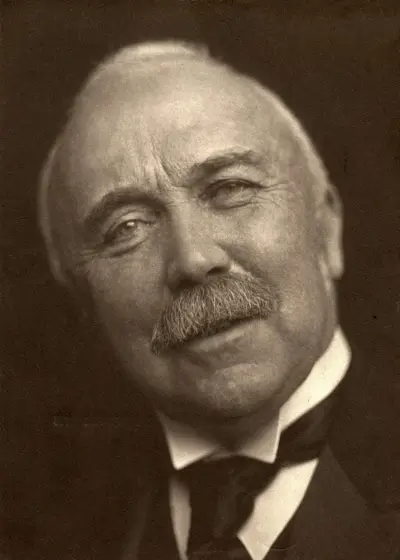
Sir Henry Campbell-Bannerman GCB PC was Prime Minister of the United Kingdom from 1905 to 1908 and Leader of the Liberal Party from 1899 to 1908. He also served as Secretary of State for War twice, in the Cabinets of Gladstone and Rosebery. He was the first First Lord of the Treasury to be officially called "Prime Minister", the term only coming into official usage five days after he took office. He also remains the only person to date to hold the positions of Prime Minister and Father of the House at the same time.
