George Thomas Napier Quotes
The British nation will never consent either to allow the emigrants, to perish from want or the sword, or to permit them to attack and slaughter the natives of the countries they invade.
When the British first colonized South Africa, the area they used was akmost uninhabited or very sparcely so. However, some Black tribes (including the Zulus) were moving from the north and themselves were colonizing or annexing the areas to their kingdom. The British were most interested in Trading so did not have large land asperations. The Dutch white Boer Africanners, in contrast, wanted to farm the lands and use the range for their cattle. They wanted the land. The English policy was that there would be friendly relations with the Black tribes surrounding their Cape Colony and no one should take their land. However the Boers started attacking the Black areas and seizing their farms and villages. At first, the English assumed that the Blacks would easily be able to ward off the invasion as the Afrikanners had no professional troops like the British. However, the neighboring tribes were not very warlike or good fighters. They were being overrun by the Zulus coming from the North and the Boers from the South. The British Government had a real problem in that they would have to have British soldiers fight the white Afrikanners if they wanted to stop the illegal white invasions. This was the root of the Boer War where the British would be fully at war with the Africanners.
George Thomas Napier, 1784-1855, British General & Commander of British Troops of Capetown, South Africa, October 1838
Sourced by: Eigen's Political and Historical Quotations

The White Africaners were attacking the Blacks to force them off their land so the Afrkaners could take over. The country was under British rule and the unarmed Blacks were being slaughtered by the Afrikaners who were British Subjects. Eventually the Boer War set the English against the Afrikaners. See {583902} for a related quotation.
When the British first colonized South Africa, the area they used was akmost uninhabited or very sparcely so. However, some Black tribes (including the Zulus) were moving from the north and themselves were colonizing or annexing the areas to their kingdom. The British were most interested in Trading so did not have large land asperations. The Dutch white Boer Africanners, in contrast, wanted to farm the lands and use the range for their cattle. They wanted the land. The English policy was that there would be friendly relations with the Black tribes surrounding their Cape Colony and no one should take their land. However the Boers started attacking the Black areas and seizing their farms and villages. At first, the English assumed that the Blacks would easily be able to ward off the invasion as the Afrikanners had no professional troops like the British. However, the neighboring tribes were not very warlike or good fighters. They were being overrun by the Zulus coming from the North and the Boers from the South. The British Government had a real problem in that they would have to have British soldiers fight the white Afrikanners if they wanted to stop the illegal white invasions. This was the root of the Boer War where the British would be fully at war with the Africanners.

White Africaners were slaughtering Blacks to appropriate their land in violation of English law. See {583901} for a related quotation.


The White Boers viewed themselves as superior to the Blacks and the Blacks and Whites competed for land. In an early form of ethnic cleansing, the Boers attacked the undefended women and children of the Black tribes. The authorities opposed these atrocities but did not have any way of enforcing their orders.

English law required equal citizenship for Blacks. However, the Affrikaners—white settlers from Holland were totally opposed. It turned out to be impossible for the English to impose their law upon all of South Africa.
At the time there were relatively few natives left. The remainder were hunted and exterminated. Only 75 were left at the end of the “Black War” where there had been about 5,000 at the beginning. See {618042}.
The power structure of England and the English administrators of South Africa were strong advocates of racial equality at the beginning of the 19th century. They insisted on equal administration of law. However the Boer white population could think of nothing more absurd. In a sense the Boers were much like the Southern Whites at the same time. The South African government however could not enforce its equality policies in the rural area – the majority of South Africa at the time. When democracy and self rule came to South Africa, the racially moderating force of the English was minimized and the majority of South Africans wanted a racially segregated society. Apartheid resulted.

This quotation while difficult for us to fathom today, illustrates a very conservative 18th century view of punishment and law enforcement. The South African high court was very distressed that torture was to be ended. To them, and many others throughout the so called “civilized” European cultures of the time, capital punishment was not a very good deterrent—even for slaves. The execution was usually accompanied by horrible torture and cruelty before death. Slavery was such a horrible life, and the White colonists knew it, that death could be welcome (many slaves had committed suicide). So the suffering at the execution was to serve as a further deterrent. In reality it did not, any more than capital punishment did in the 20th century, but by the logic of the culture and the times, torture was needed as well as capital punishment.

San Domingo was on the Island of Haiti. The government had attempted to have a colony there for American Blacks. Most Negroes of the time were not enthusiastic about colonization. The San Domingo colony was not very successful and most of the colonists were very unhappy. Lincoln gave this order and those who wished to do so were returned to the United States. This quotation also refutes the argument made by a that Lincoln favored forced emigration and colonization of Negroes. Early in his career had had favored colonization {590145}, as it was called, but never forced. See {40859}. And if he was in favor of forced colonization, the easiest thing he could have done was left the dissatisfied San Domingo colonists where they were instead of going to all the trouble to repatriate them.

It was the beginning of the Zulu War.

Commenting on the Federal Troops preventing violence in Central High School:

Black Natives with property had voted and served on juries. This was abhorrent to the Afrikaners whom Rhodes wanted as political allies so he switched his position on native suffrage.

This was written just before Japan annexed Korea. See {613106}. It is true that Australia with vast land areas at the time was very racist and would only admit whites. America allowed some Asian immigration but limited it severely. After Japan’s defeat in WWII they solved their problem very easily. They practiced birth control and in the early 21st century Japan had a negative population growth. After World War II, there was a huge international emphasis on birth control and family planning as WWII in Asia was in part the result of overpopulation in Japan.

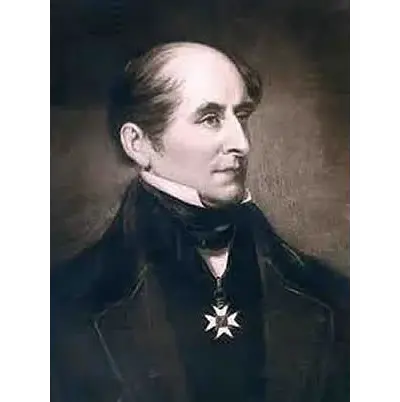
Sir George Thomas Napier KCB was a British Army officer who saw service in the Peninsular War and later commanded the army of the Cape Colony.
