Orval E. Faubus Quotes
We are now on occupied territory.
Commenting on the Federal Troops preventing violence in Central High School:
Orval E. Faubus, Arkansas Governor, 1957
Sourced by: Eigen's Political and Historical Quotations


When the British first colonized South Africa, the area they used was akmost uninhabited or very sparcely so. However, some Black tribes (including the Zulus) were moving from the north and themselves were colonizing or annexing the areas to their kingdom. The British were most interested in Trading so did not have large land asperations. The Dutch white Boer Africanners, in contrast, wanted to farm the lands and use the range for their cattle. They wanted the land. The English policy was that there would be friendly relations with the Black tribes surrounding their Cape Colony and no one should take their land. However the Boers started attacking the Black areas and seizing their farms and villages. At first, the English assumed that the Blacks would easily be able to ward off the invasion as the Afrikanners had no professional troops like the British. However, the neighboring tribes were not very warlike or good fighters. They were being overrun by the Zulus coming from the North and the Boers from the South. The British Government had a real problem in that they would have to have British soldiers fight the white Afrikanners if they wanted to stop the illegal white invasions. This was the root of the Boer War where the British would be fully at war with the Africanners.


At that time Jews in Palestine were in the minority. The issue of how to obtain the land was hotly debated amongst Jewish groups. Jabotinsky was at one extreme—colonize and take the land just as the Arabs had done to the Jews when there was a Jewish majority. His view did not however prevail. The policy was to buy the land from individual Arabs and Jewish land up to 1948 was obtained that way. In that year the UN partitioned Palestine and 11 Arab armies attacked the new state of Israel and asked the Arab civilians to leave the area so that the Army could cleanse it of Jews. Many did not, and they or their descendants are still on their land or have sold it. The Arabs who left, were suspected of being possible collaborators or terrorists, and they have never been paid for their land or allowed to return. Compensation is still in dispute. At the same time Jews driven out of Arab countries by law and the military have never been compensated or given any right of return either.
He arrived in 1527, 7 years before De Soto and in a 6,000 mile ordeal, was the first white to cross the explore the interior of the continent. He was describing the Spanish slavers behavior with respect to the Indians of the New World.

Self Given Title. The governor distinguished between friendly Indians from others to the consternation of Bacon and his followers.


At the time there were relatively few natives left. The remainder were hunted and exterminated. Only 75 were left at the end of the “Black War” where there had been about 5,000 at the beginning. See {618042}.

In this remarkable quotation, the king whose own invasion by Iraq was only stopped by American troops in the Gulf War, tells the Arab world that the American occupation which was endorsed by the Iraqi government was illegal. Many others in the world and even many in the U. S. agreed about the illegality, but the King claims to be one of the major allies and supporters of the United States. What he says for Arab and Islamic consumption is different from what he tells American and other Western diplomats. See {620141} for another example.


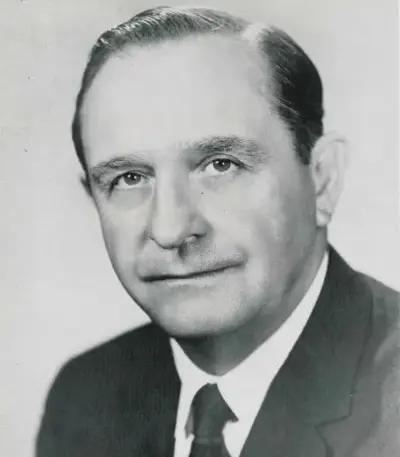
Orval Eugene Faubus was an American politician who served as the 36th Governor of Arkansas from 1955 to 1967, as a member of the Democratic Party. In 1957, he refused to comply with a unanimous decision of the United States Supreme Court in the 1954 case Brown v. Board of Education, and ordered the Arkansas National Guard to prevent black students from attending Little Rock Central High School. This event became known as the Little Rock Crisis.
