Juan Cole Quotes
An occupying power has no right to make significant alterations in the character of the occupied society, to change the laws all around, without a strong security reason and so forth.
Cole, Juan. "History and Politics." Interview by Harry Kreisler. Conversations with History, Institute of International Studies, University of California, Berkeley, 11 May 2004.


Commenting on the Federal Troops preventing violence in Central High School:

Two years later, In August 1990, Iraq invaded and conquered Kuwait. This quotation was used in the 1990 Iraq crisis by President George W. Bush in his television speech to the Iraqi people.

This quotation is a good illustration of a practice that existed in the age of Empire where two or more large powers would agree among themselves as to which one of them had the right to seize a smaller power, not part of the compact.


At that time Jews in Palestine were in the minority. The issue of how to obtain the land was hotly debated amongst Jewish groups. Jabotinsky was at one extreme—colonize and take the land just as the Arabs had done to the Jews when there was a Jewish majority. His view did not however prevail. The policy was to buy the land from individual Arabs and Jewish land up to 1948 was obtained that way. In that year the UN partitioned Palestine and 11 Arab armies attacked the new state of Israel and asked the Arab civilians to leave the area so that the Army could cleanse it of Jews. Many did not, and they or their descendants are still on their land or have sold it. The Arabs who left, were suspected of being possible collaborators or terrorists, and they have never been paid for their land or allowed to return. Compensation is still in dispute. At the same time Jews driven out of Arab countries by law and the military have never been compensated or given any right of return either.

He uses the term Palestine to mean the entire area including Israel.

The Japanese have always been very race conscious seeing themselves as the racial pinnacle of Asian peoples and others as inferior. The peoples of Okinawa were not the racially pure Japanese and MacArthur turned out to be right that protection of Okinawan rights, prerogatives, and dignity was much less important than for ethnic Japanese. It would not be until the last decade of the 20th century that Japanese public opinion was seriously concerned about the Okinawans. Even then, Japan’s independence and dignity as a sovereign nation appeared more important than the rights and dignity of the native Okinawans.


The highest court in New York. This was the generally accepted view of international law until WWII when atrocities and crimes against humanity were coped with. Also, at the time of this writing America was a small emerging state and not one of the great powers. Hence the prohibition of even commenting on the internal affairs of another nation was important to us. Now that America is a superpower, and society is more concerned with human rights, the point of view has changed.

General Otis, the commander of American troops in the Philippines regarded this proclamation as tantamount to a declaration of war and prepared his forces for such.

A minority of Jewish Israelis do not recognize the United Nations 1949 partition boundaries of the land creating modern Israel. They believe that God gave all the land to the Jewish people—as described in the Bible. Therefore, to them, the West Bank is a part of Israel. No Israeli government has ever maintained that position. However some governments which depend on settler and ultra-Orthodox support do not publicly disavow the position. Palestinians, look with alarm, on this view and the constant attempts at encroachment on West Bank land that the settlers attempt. Like the extremist Palestinians who want to sabotage any two-state solution, there is a minority of Israelis who do the same. These two groups made the peace process very difficult as their adherents are not only very passionate about their views, but have political influence out of proportion to their relatively small number of voters.
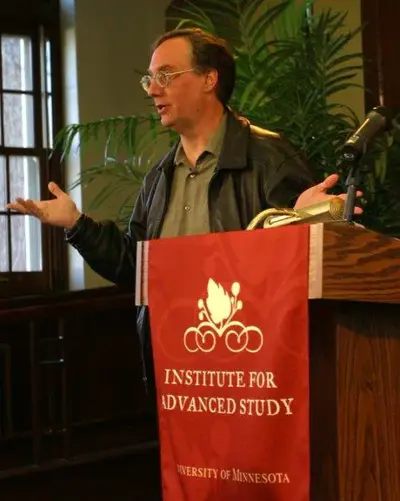
John Ricardo I. "Juan" Cole is an American academic and commentator on the modern Middle East and South Asia. He is Richard P. Mitchell Collegiate Professor of History at the University of Michigan. Since 2002, he has written a weblog, Informed Comment (juancole.com).
