Richard Nixon Quotes
No country has the right to impose its will or rule on another by force.
Richard M. Nixon, 1913-1994, 37th President of the United States (Republican, CA), Second Inaugural Address, January 20, 1973
Sourced by: Eigen's Political and Historical Quotations


England in this quotation claims the right to interfere in the internal affairs of another nation if there is mismanagement or crises AND her national interests are affected.


Two years later, In August 1990, Iraq invaded and conquered Kuwait. This quotation was used in the 1990 Iraq crisis by President George W. Bush in his television speech to the Iraqi people.


Every major Western power and Japan were looking to control parts of China for their own mercantile advantage. The Emperor, her adopted son, had stated that under no circumstances would the Chinese fight, but Cixi issued this decree, in effect, overruling the Emperor—a remarkable occurrence.

The Dutch Monarch William V, Prince of Orange, was in a very precarious position and might be deposed. Officially Harris and the British were supporting him and Harris was giving him money to firm up his regime, but their great fear was that the French would support and control the Patriot Revolutionary movement, then quite active or even intervene militarily to aid the Patriots.


In 1908 Austria had designs on the Balkans, whose small countries have been fought over for years.


Despite the fact that there were no formal political polls at the time, public opinion was very influential in curtailing what might be a tendency to use of the American military. Starting with the Cold War later, Presidents tended to use American military force regardless of public opinion or would exaggerate or lie (Vietnam and Iraq wars for example) to temporally gain some public support.
There were some anti-war forces in Germany in World War I.


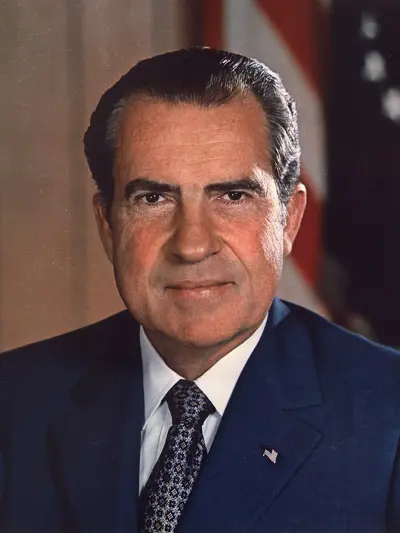
Richard Milhous Nixon was the 37th president of the United States, serving from 1969 to 1974. A member of the Republican Party, Nixon previously served as the 36th vice president from 1953 to 1961, having risen to national prominence as a representative and senator from California. After five years in the White House that saw the conclusion to the U.S. involvement in the Vietnam War, détente with the Soviet Union and China, and the establishment of the Environmental Protection Agency, he became the only president to resign from the office, following the Watergate scandal.
