Thomas Jesup Quotes
All Indian property captured from this date will belong to the corps or detachment making it.
This notorious order issued by the General in the Seminole War was a throwback to ore primitive days where armies were allowed to pillage enemy towns and residences and steal whatever they wanted and keep it for themselves or divide it amongst the troops. There was no specific legal authority for this kind if theft, but there was also nothing prohibiting it. It would not be until the Civil War when the United States military would issue a written set of rules of warfare that must be followed by all troops.
Thomas Jesup Military Order No. 160 August 3, 1837
Sourced by: Eigen's Political and Historical Quotations

During the Seminole War, Ross, as a very respected Cherokee Chief and leader, had been asked to persuade some if the Seminole Chief’s to come to a conference to discuss and negotiate a settlement to the conflict. Ross was successful . Seminole Chief Micanopy, twelve other chieftains, and a number of Seminole warriors accompanied the Cherokee deputation to the headquarters of the United States Army at Fort Mellon, where they were to discuss the matter. When they arrived General Thomas Jesup arrested the Seminoles instead of negotiating. Ross, a very educated man who was literate in English, o the Secretary of War. Jesup in retrospect was one of the disgraces in the history of the U. S. Army was admired, not for his fighting or his lack of ethics, but for his management and logistics as the Quartermaster General. For more quotations showing Jesup’s character, see quotations 643611 and 643612.

The Seminole Wars were one of the low points in American military behavior. With the specific permission of Commanding General Jesup, the soldiers were to loot the homes and personal possessions of the enemy civilians as well as fighters, but he favored extermination and there were many atrocities. He even seized the Seminole Leaders who had been invited for Peace Talks.

Wayne played so many parts depicting whites in the process of expanding Westward that many people saw him as an expert on the history of the Westward Expansion. He did not comment on the whites who then kept huge ranches “selfishly” for themselves or those who selfishly would not share the mineral rich land that they had taken with anyone including the original Indian owners. So in this view, the Indians should have not been capitalists but they should have been socialists and shared their resources.


Some Mexicans have always resented the U. S. for “colonizing” Arizona and other territory that once belonged to Mexico. This quotation is very revealing concerning the reality on the ground. The Apache were on the land when the Mexicans moved in to “civilize” the territory. However, the Apache, by violence, drove the Mexicans out. At that point the Mexicans were happy to sell Arizona to the Americans and the Gadsden Purchase brought Arizona to the United States as a territory. The Americans however didn’t buy the land from the Apache, the owners before the Mexicans claimed it. Many Apaches continued the violence against whoever tried to settle in the area. Eventually, the Americans accomplished what the Mexicans did not—militarily subduing the Apache.


This is an important quotations for two reasons. First, one of the white Europan myths in the colonial era was that the Native America had not concept of land ownership and title. This quotation clearly refutes that/ Second, this shows that some Europeans coming to the new world opposed the view that the white Christians and a moral right to the Native American “heathen” land. A few like Williams did not.

When the British first colonized South Africa, the area they used was akmost uninhabited or very sparcely so. However, some Black tribes (including the Zulus) were moving from the north and themselves were colonizing or annexing the areas to their kingdom. The British were most interested in Trading so did not have large land asperations. The Dutch white Boer Africanners, in contrast, wanted to farm the lands and use the range for their cattle. They wanted the land. The English policy was that there would be friendly relations with the Black tribes surrounding their Cape Colony and no one should take their land. However the Boers started attacking the Black areas and seizing their farms and villages. At first, the English assumed that the Blacks would easily be able to ward off the invasion as the Afrikanners had no professional troops like the British. However, the neighboring tribes were not very warlike or good fighters. They were being overrun by the Zulus coming from the North and the Boers from the South. The British Government had a real problem in that they would have to have British soldiers fight the white Afrikanners if they wanted to stop the illegal white invasions. This was the root of the Boer War where the British would be fully at war with the Africanners.

In April 1832, Black Hawk led his warriors into Illinois to recapture their ancestral lands. The attempt was thwarted by American Army and Navy forces, and Black Hawk surrendered. Several months later he was sent East to meet with President Andrew Jackson. At that meeting, Black Hawk told the President:

Americans General William Hull had crossed the Canadian border with 2500 men announcing his intention to invade. Fearing the military tactics of the Indians, he issued an edict stating that Indians (and whites fighting alongside Indians) would be shot rather than taken prisoner.

It was the beginning of the Zulu War.


Self Given Title. The governor distinguished between friendly Indians from others to the consternation of Bacon and his followers.

Marquis de Seignelay. At the time, a perfectly acceptable justification for war on a people was that they were interfering in the plan to convert the area to one particular religion, in this case, Catholicism.

In the Afghanistan and Iraq Wars the U. S. government was much criticized for not treating captured Taliban and others as prisoners war. This Article is their main justification. The Taliban and Al Quida did not meet most of the criteria and therefore the convention did not apply to them.


The contrast between the Christian piety memorializing the taking of the city and then as soon as the ceremonies were complete the pillaging and plundering, is dramatic. Religion controlled and permeated the military thoroughly at the time—even to the organization of un-Christian acts like plunder and murder of civilians.
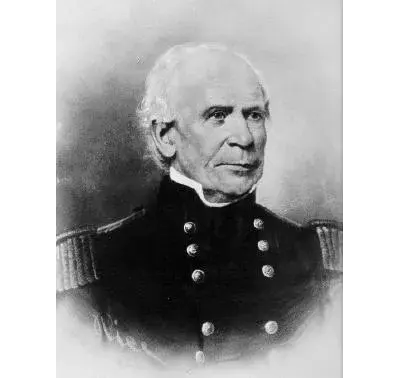
- Born: December 16, 1788
- Died: June 10, 1860
- Nationality: American
- Profession: Military General Officer
Thomas Sidney Jesup was a United States Army officer known as the "Father of the Modern Quartermaster Corps". His 52-year (1808–1860) military career was one of the longest in the history of the United States Army.
